Unknown's avatar

About Rabbi Brant Rosen

I'm a rabbi, blogger, and activist with a special interest in Israel/Palestine justice work.

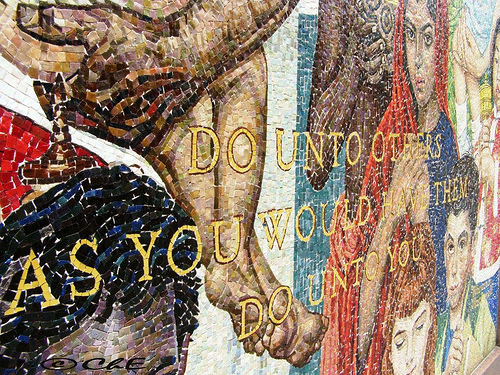
Do Unto Others: Living Reciprocity

Love your neighbor as yourself: I am YHVH  (Leviticus18:19)

In his recent book “God is Not One,” Religious Studies professor Stephen Prothero points out that while the world’s religions diverge on “doctrine, ritual, mythology, experience and law,” they tend to converge “when it comes to ethics” (p. 3).

The well-known verse above (from this week’s Torah portion, Parashat Kedoshim) provides the clearest example of this convergence. Known as “The Ethic of Reciprocity” (aka “The Golden Rule”), this precept is a foundational ethical teaching and has been invoked as the basis for the modern concept of human rights.

The Jewish rendering of the Golden Rule, of course, is well-known. When asked to sum up the essence of Torah, Rabbi Hillel famously responded thus:

What is hateful to you, do not do to your neighbor. This is the whole Torah; all the rest is commentary. Now go and study (Babylonian Talmud, Shabbat 31a).

While Hillel invoked this ethic in the name of Torah tradition, it is important to bear in mind that the Golden Rule is at heart a universal ethic. Indeed, even cursory investigation reveals that versions of this precept appear in virtually every Western and Eastern spiritual tradition.

Now go and study:

Bahai Faith
Lay not on any soul a load that you would not wish to be laid upon you, and desire not for anyone the things you would not desire for yourself. (Bahá’u’lláh, Gleanings)

Buddhism
Treat not others in ways that you yourself would find hurtful. (The Buddha, Udana-Varga 5.18)

Christianity
In everything, do to others as you would have them do to you; for this is the law and the prophets. (Jesus, Matthew 7:12)

Confucianism
One word which sums up the basis of all good conduct….loving-kindness. Do not do to others what you do not want done to yourself. (Confucius, Analects 15.23)

Hinduism
This is the sum of duty: do not do to others what would cause pain if done to you. (Mahabharata 5:1517)

Islam
Not one of you truly believes until you wish for others what you wish for yourself. (The Prophet Muhammad, Hadith)

Jainism
One should treat all creatures in the world as one would like to be treated.  (Mahavira, Sutrakritanga 1.11.33)

Monism
If people regarded other people’s families in the same way that they regard their own, who then would incite their own family to attack that of another? For one would do for others as one would do for oneself. (Mozi)

Native American Spirituality
Do not kill or injure your neighbor, for it is not him that you injure, you injure yourself. But do good to him, therefore add to his days of happiness as you add to your own. Do not wrong or hate your neighbor, for it is not him that you wrong, you wrong yourself. But love him, for Moneto loves him also as he loves you. (Shawnee Teaching)

Quakerism
Oh, do as you would be done by. And do unto all men as you would have them do unto you, for this is but the law and the prophet. (Postscript to the Quaker Peace Testimony)

Sikhism
I am a stranger to no one; and no one is a stranger to me. Indeed, I am a friend to all. (Guru Granth Sahib, p.1299)

Taoism
Regard your neighbour’s gain as your own gain and your neighbour’s loss as your own loss. (T’ai Shang Kan Ying P’ien, 213-218)

Unitarianism
We affirm and promote respect for the interdependent web of all existence of which we are a part. (Unitarian principle)

Zoroastrianism
Do not do unto others whatever is injurious to yourself. (Shayast-na-Shayast 13.29)
Yizkor and the Rhythms of Remembrance

As we do every year, JRC just observed a Yizkor (“Memorial”) service to mark the end of the Pesach holiday. This particular year, I introduced our memorial prayers by saying that mourning itself is something of an open-ended journey – and one that rarely unfolds in a predictable manner. I also pointed out that more recent research in the psychology of grief tends to reject the linear “Stages of Grief” approach made famous by Elizabeth Kübler-Ross.

From a recent piece in The New Yorker:

Though Kübler-Ross captured the range of emotions that mourners experience, new research suggests that grief and mourning don’t follow a checklist; they’re complicated and untidy processes, less like a progression of stages and more like an ongoing process—sometimes one that never fully ends.

I do believe that the notion of grief as an “ongoing process” is at the heart of the Yizkor memorial observance. It often feels to me that there is a powerful rhythm to the practice of saying memorial prayers during major four festivals of the year (Yom Kippur, Sukkot, Pesach and Shavuot). Since each festival has its own unique spiritual themes, the process of ongoing Yizkor observance drives home the truth that grief is a cyclical – rather than linear – experience

Here is my own take on how this process resonates through the Jewish holiday season:

Yizkor of Yom Kippur – “Dwelling in the In-Between:” the Day of Atonement is, if you will, the spiritually rawest time of the Jewish calendar. It is the time in which we acknoweldge our mortality and look into the coming year with a potent emotional mix of awe and trepidation. The tenor of Yizkor for Yom Kippur thus resonates with the pain and uncertainty that inevitably comes with grief. In the juncture between a year past and a year yet to come, we allow ourselves to dwell in that “in-between place” between the past we know and the future we have yet to experience.

Yizkor of Sukkot/Shemini Atzeret – “Preparing for Winter:” Immediately after the harvest festival of Sukkot comes the observance of Shemini Atzeret, which marks the beginning of the rainy season in Israel. Our Yizkor prayers are recited during our preparation for winter – the season in which we construct the necessary protection and defenses for these cold, dark months. Yizkor for Sukkot/Shemini Atzeret honors these defenses – as well as the spiritual work we know we must do in order to make it through the long nights ahead.

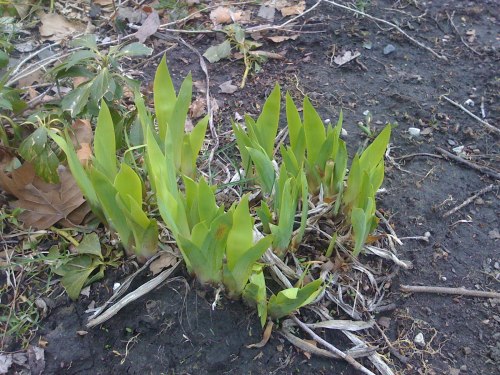
Yizkor of Pesach – “Inevitability of Life Renewed:” On Passover we begin to see the green shoots of new life sprouting up from the previously hard, fallow earth. The natural world around us testifies to the inevitability of liberation – and we come to understand that this rebirth is indeed woven into the very fabric of creation. So too, with our own lives as we walk the path of the mourner: the Yizkor of Pesach comes to remind us that there is life after grief as surely as Spring follows Winter.

Yizkor of Shavuot – “Celebrating the Fruits of our Labor:” On Shavuot, we bring in the harvest. As Spring moves in to full bloom, we now begin to reap what we’ve sown. We now affirm that all of the hard work (and bereavement is nothing if not hard work) does indeed pay off if we do it in a spirit of openness and love. On this Yizkor, we celebrate the fruits of our labors – and rededicate ourselves to the journey ahead.

It’s a shame that the observance of Yizkor tends to be falling off among liberal Jews. I truly believe there is great spiritual resonance in these rituals – which cycle outward over the seasons and throughout the years. Even for those who are not traditionally observant Jews, there is real meaning to be found in these rhythms of remembrance.

The next Yizkor will occur in several weeks, on Shavuot. (May you reap a bountiful harvest…)

Countdown to Sinai: An Omer Calendar Sampler

Calendar for counting the Omer, Amsterdam, Netherlands ca. 1794

I recently received a lovely new Omer calendar, “A Journey Through the Wilderness,” in the mail from my dear friend Rabbi Yael Levy of Reconstructionist congregation Mishkan Shalom. I’ve practiced the ritual of Counting the Omer off and on over the years; her immensely creative new effort has inspired me to take it on again with renewed intention this year.

I’ll let Rabbi Yael’s own words describe this unique spiritual discipline:

The counting of the Omer is the 49-day period between Passover and Shavuot, when it is the practice to stand every night and, in the midst of opening and closing prayers, count each day.

This counting began as an agricultural ritual. Our ancestors would pray for an abundant spring harvest by waving a sheaf, an Omer, of barley toward the night sky. Over time, this agricultural rite was replaced by liturgy and the counting became the way to mark the Israelites’ journey from bondage in Egypt to revelation at Mt. Sinai.

For the Jewish mystics of the 16th and 17th centuries, the Counting of the Omer became a time of spiritual exploration and cleansing, a way for us to prepare our souls to receive the divine guidance that comes to us each year on Shavuot.

Counting the Omer is a 49-day mindfulness practice aimed at helping us pay attention to the movement of our lives, to notice the subtle shifts, the big changes, the yearnings, the strivings, the disappointments, the hopes and the fears. It is an opportunity for deep introspection, a call to notice our inclinations, our default responses, our reactions to shifting emotions and circumstances…

The mystical tradition teaches that these 49 days between Passover and Shavuot are divided into seven-week periods, with each week containing a specific spiritual quality. The qualities are by guided by seven of the ten sefirot, the Divine emanations through which, the mystics believed, God reveals Godself in the world.

Today, by the way, is the fifth day of the Omer, which corresponds to the daily sefirah of Hod within the weekly sefirah of Chesed. Rabbi Yael renders this formula “Presence Within Love.”  As she instructs us, this is the day in which we contemplate upon:

Being where we are rather than where we think we should be or where we wish we could be.

Cultivating the capacity to be patient with ourselves and others, knowing that we are all doing the best we can in each moment.

If you are interested in delving deeper into this practice, here are some other Omer resources you might check out:

– Rabbi Rami Shapiro’s  Omer Journal, which includes the eclectic wisdom of spiritual teachers such as The Ba’al Shem Tov, Franz Kafka, Rilke and Lao Tzu;

– Rabbi Jill Hammer’s “Omer Calendar of Biblical Women,” which thematically connects one Biblical woman to each day of the Omer;

A calendar created by Pauline Frankenberg of the University of Manchester Centre for Jewish Studies, who painted illustrations depicting specific plants mentioned in the Bible for each day of the Omer;

– And finally, a must-have for every Omer enthusiast:  the now-legendary Simpsons Omer counter known as “The Homer Calendar.”

Safe travels to Sinai…

A New Blog is Born!

Welcome to Yedid Nefesh: a spin-off from my first blog, Shalom Rav. When I began SR back in 2006, I didn’t have much of a game plan other than writing posts about anything and everything I felt like sharing for what it was worth. For reasons I cannot fully articulate, SR increasingly began to focus almost exclusively on peace and social justice issues, with a special emphasis on Israel/Palestine.

So now I’m inaugurating Yedid Nefesh (in Hebrew: “soul mate;” and the name of a beautiful liturgical poem for Shabbat). Through YN, I hope to create an outlet for other subjects that are near and dear to my heart, particularly in the realm of Torah commentary, Jewish life and spiritual practice in general.

So if you’ve surfed over from Shalom Rav, welcome. I hope you’ll join the conversation here as well!