Race and Infection

In this week’s Torah portion, Parashat Beha’alotecha, Aaron and Miriam unexpectedly disparage their brother Moses:

When they were in Hatzerot, Miriam and Aaron spoke against Moses because of the Cushite woman he had married: “He married a Cushite woman!” (Numbers 12:1)

Moses’ siblings’ slur is confusing on a number of levels. In the first place, it’s not quite clear who this “Cushite woman” actually is. Cush is commonly understood to refer to ancient Ethiopia (in Genesis 10:6 we read that the Cushites descended from Ham, the son of Noah.) However, Moses’ wife Zipporah is a Midianite, not a Cushite.

Commentators have handled this discrepancy in different ways. Some suggest that Zipporah and the Cushite woman are the same person. (Pointing out that Habbakuk 3:7 refers to a Midianite tribe called Cushan). Other Biblical scholars posit that the reference to the Cushite wife is a fragment of a larger literary tradition that has since gone the way of history.

These theories are interesting as far as they go, but in the end they fail to address the most troubling dimension to this episode: namely, the patently racist nature of Miriam and Aaron’s words.

Indeed, whatever else might be going on in this cryptic Biblical narrative, it might be, at least in part, an anti-racist polemic. After her unabashedly xenophobic exclamation “He married a Cushite woman!” it is more than a bit ironic that Miriam is stricken with tzara’at – a skin affliction that manifests itself with “snow-white scales.” (12:10) In a sense, God seems to be saying to Miriam: “You like white so much, I’ll show you white!”

Classical Jewish commentators famously understand tzara’at to be a physical manifestation of the sin of lashon harah – negative speech, or gossip. For myself, I’ve always found this interpretation to be less compelling as theology (i.e. illness is a result of divine punishment) than as a metaphor for the virulent nature of hate speech. I would prefer to say it this way: Miriam’s malady is not literally caused by her words; rather, her infectious tzara’at mirrors the inner properties of her racist words themselves.

Alas, we know this to be all too true: hate speech can be fatally infectious. Left unchecked, racism almost invariably spreads virally through society. Centuries after these Biblical words were written, hateful words continue to mutate into racist attitudes and actions in new and frightening ways.
Life at the Margins: Shavuot and the Queer Experience

A lovely Shavuot drash by my friend and colleague Rabbi Josh Lesser, of Congregation Bet Haverim in Atlanta – a Reconstructionist community founded by gays and lesbians:

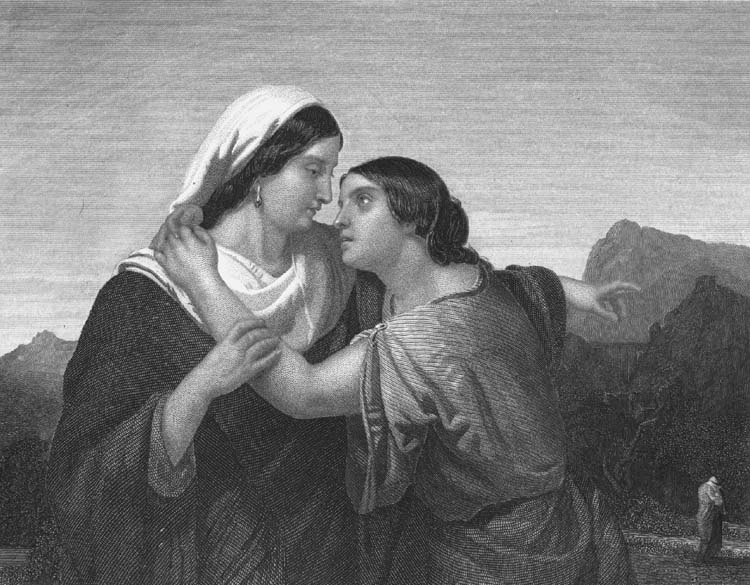
What queer person cannot relate to Naomi’s fate at one time or another? Feeling lonely, without family, without support and without a clear picture of the future – surely many of us remember a time like that. If we are lucky like Naomi, that reality changes. When she encourages her daughters-in-law to return to a more certain future with security and promise one daughter-in-law, Ruth, stays and pledges an oath of fidelity inextricably binding her life to Naomi’s forever, giving us one of the Torah’s most poignant examples of a family of choice. Her pledge is so complete that some people question if there was more than a mother-daughter bond, but rather that of a life partner. Indeed many people, lesbians and straight folk alike, use Ruth’s pledge as part of their life-long commitment to each other. The text does not answer what their relationship is, but the question itself is important and allows us to wonder. To me, the even more powerful message is that through this pledge, the future changes, a future that will eventually lead to the messianic age.

This transformation is the most queer part of the text. It is this pledge of mutuality and shared destiny in the face of the unknown that enables what is clearly a path of despair and hopelessness to be transformed so powerfully that it produces the seed of the messianic line. Through a series of events, some even say through God’s hand, Ruth meets Boaz, a kinsman of Naomi. He admires her dedication to Naomi and offers them support and comfort. Eventually, Boaz decides to join their family of choice from which an offspring emerges beginning the Davidic messianic line. Here we see that God can be powerfully known and experienced through a relationship. If that is not a revelation as profound as Torah, I do not know what is. It is often through selfless giving that God is known as powerfully as if the earth was shaking and thundering. Even more revealing for queer folks is that this relationship occurred in the margins. The central elements of this story take place in Moab, a questionable place at the time, and in the fields – a place of danger and transition. The central players are likewise marginal: widows, older people and strangers. And yet, here in the margins, godliness manifests. Ruth is a testament to everyone that God’s presence resides in those places society shuns or pities.

Facing God, Facing One Another

This week’s Torah portion, Parashat Naso, contains what is possibly the most well-known extant blessing in Biblical tradition: the Birkat Cohenim or “Priestly Blessing:”

May ADONAI bless and protect you. May ADONAI shine (God’s) face upon you show favor to you. May ADONAI turn (God’s) face to you and grant you peace. (Numbers 6:23-26)

One of the most notable aspects of this blessing is its metaphorical use of “God’s face.” The final two blessings utilize this image in two different ways: in the second blessing, the “light” of God’s countenance bestows acceptance or grace (in Hebrew, chen); in the third and final blessing, the “turning” of God’s face expresses Shalom – peace, wholeness, fulfillment.

The metaphor of God’s face is used throughout the Bible, often to convey the powerful and immediate experience of the Divine Presence. In the closing verses of the Torah, for instance, Moses’ unique relationship with God underscored when we read that “God singled him out face to face” (Deuteronomy 34:10). On the other hand, the concept of hester panim (the “hiding of God’s face”) is often invoked to convey divine anger and punishment (see, for instance, Deuteronomy 31:18).

As poetic as these images may be, I personally struggle with their overly supernatural/anthropomorphic usages. I’m much more drawn to poignantly humanistic way “God’s face” is invoked during the reconciliation of the estranged twin brothers Jacob and Esau.

Upon their reunion, Jacob says to his older brother:

Please, if you would do me this favor, accept from me this gift; for to see your face is like seeing the face of God… (Genesis 33:10)

This use of the metaphor suggests that Godliness is particularly manifest in the act of conflict resolution – when former enemies find the wherewithal to “turn their faces” to one another. In this regard, we might well view the Birkat Cohenim not merely as a blessing of well-being but as a spiritual imperative to all who receive it.

When does God’s face shine upon us or turn to greet us? When we turn our faces to one another in acceptance and peace.

On Choosing Films of Faith

Can’t wait to see Terence Malick’s “The Tree of Life” (above) which looks pretty awesome and is being hailed by many as a film with powerfully existential/spiritual themes.

In anticipation of “Tree’s” release, I recently surfed over to Arts & Faith’s “Top 100 Films.” Though I consider myself something of a film nerd, I was pretty humbled to discover I haven’t seen the majority of films on the list (and haven’t even heard of a fair amount of them either.)

Check it out yourself and see if you agree with the rankings. As for me, I have no argument with “The Passion of Joan of Arc” as #1, but what on earth is “Make Way for Tomorrow“- a minor 1937 comedy directed by Leo McCarey, of “Duck Soup” fame – doing at #6? And I’m sorry, as much as I love Orson Welles’ “Touch of Evil,” I’m not sure I’d call it a spiritually themed movie.

And as for Jewish films, was “Fiddler on the Roof really the best they could do?  Granted there aren’t that many “Jewish films of faith” to choose from, but off the top of my head, I’d nominate “The Quarrel,” “Enemies: A Love Story,” or the Coen Bros’ “A Serious Man for starters…

Voices in the Wilderness

As we begin Parashat Bamidbar – the first portion in the book of Numbers – we read:

God spoke (vaydaber) to Moses in the wilderness (bamidbar).

I’ve often been interested in the fact that the Hebrew verb “to speak” and the word for “wilderness” share a common root: d-b-r.  It suggests an important connection between wilderness and speech – more specifically divine speech.

There are, in fact, numerous Biblical descriptions of Godly encounter that take place in a deep wilderness setting. Before Moses discovers the burning bush, for instance, he drives his flock “achar hamidbar” – “beyond the wilderness.” Not long after the Exodus, the Israelites experience a communal revelation at Sinai after they had “encamped in the wilderness” (Exodus 19:2)  And in 1 Kings 19, the prophet Elijah encounters the still, small voice of God after traveling “bamidbar derech yom” – “a day’s journey into the wilderness.”

It isn’t difficult to understand why the desert habitat is considered sacred by so many Western, Eastern and indigenous spiritual traditions. At first glance, the wilderness might seem to be a wasteland – a “God-forsaken” environment unable to support life. But desert biomes are actually vital, and dynamic ecosystems teeming with a wide array of geological variety as well as significant plant and animal biodiversity. In other words, the desert invites us to look beyond its seemingly barren surface to discover the life that dwells deep within.

We also might regard the wilderness as more symbolic terrain – an existential place far from the “noise” of culture, artifice and ego. Indeed, this form of spiritual experience is available even to non-desert dwellers: a mindfulness or way of life that seeks to strip away the outer layers of self so we may discover, like the ancient Israelites, the divine word that dwells at the elemental core.

In the end, the journey into the wilderness is one that leads both inward and outward: to the outermost reaches of experience and the innermost reaches of the human soul. These are the places where the voice of God may truly be heard.

Counting the Omer in Funkytown

Today is the thirty-seventh day of the Omer, which according to Jewish mystical symbolism corresponds to the Divine attribute of Gevurah (“Strength”) within Yesod (“Foundation.”)

Looking for spiritually alternative ways to count the Omer? Click above to watch/listen to the great John Zorn Ensemble perform “Gevruah,” then below for Zorn’s “Yesod,” as performed by the Crakow Klezmer Band.

As you listen, read this rendering of Psalm 24 by Stephen Mitchell:

The earth belongs to the Lord
     and everything on it is his.
For he founded it in empty space
     and breathed his own life-breath into it,
filling it with manifold creatures,
     each one precious in his sight.

Who is fit to hold power
     and worthy to act in God’s place?
Those with a passion for the truth,
     who are horrified by injustice,
who act with mercy to the poor
     and take up the cause of the helpless,
who have let go of selfish concerns
    and see whole earth as sacred,
refusing to exploit her creatures
     or to foul her waters and her lands.
Their strength is in their compassion;
     God’s light shines through their hearts.
Their children’s children will bless them,
    and the work of their hands will endure.

And/or this excerpt from James Dickey’s poem, “The Strength of the Fields:”

Dear Lord of all the fields
                                             what am I going to do?
                                      Street-lights, blue-force and frail
As the homes of men, tell me how to do it
    To withdraw    how to penetrate and find the source
      Of the power you always had
                                            light as a moth, and rising
       With the level and moonlit expansion
    Of the fields around, and the sleep of hoping men.
       You?    I?    What difference is there?    We can all be saved
       By a secret blooming. Now as I walk
The night    and you walk with me    we know simplicity
  Is close to the source that sleeping men
       Search for in their home-deep beds.
      We know that the sun is away    we know that the sun can be conquered
   By moths, in blue home-town air.
          The stars splinter, pointed and wild. The dead lie under
The pastures.    They look on and help.    Tell me, freight-train,
                            When there is no one else
   To hear. Tell me in a voice the sea
         Would have, if it had not a better one: as it lifts,
          Hundreds of miles away, its fumbling, deep-structured roar
               Like the profound, unstoppable craving
            Of nations for their wish.
                                                      Hunger, time and the moon:
         The moon lying on the brain
                                                    as on the excited sea    as on
          The strength of fields. Lord, let me shake
         With purpose.    Wild hope can always spring
         From tended strength.    Everything is in that.
            That and nothing but kindness.    More kindness, dear Lord
Of the renewing green.    That is where it all has to start:
         With the simplest things. More kindness will do nothing less
             Than save every sleeping one
             And night-walking one
         Of us.
                  My life belongs to the world. I will do what I can.

On the Curse of a Windblown Leaf

As for those of you who survive, I will cast a faintness in their hearts in the land of their enemies. The sound of a windblown leaf will put them to flight. Fleeing as though from the sword, they shall fall though none pursues (Leviticus 26:36).

This verse, which comes from this week’s Torah portion, Bechukotai, is one of the many vivid curses threatened by God if the Israelites should disobey the commandments (a litany that is lovingly referred to by Biblical scholars as “The Execration.”)

I’m particularly struck that among all of the worst execrable curses God can name, comes this psychologically resonant image of a people whose anxiety is so intense that they will flee at the very slightest of triggers. Based on the description of such “symptoms,” we might well call this verse a Biblically ordained “panic attack.”

For comparison purposes, check out this excerpt from the web article, “How to Identify Signs of a Panic Disorder.” (Just go with me for a second here):

Pay attention to your emotions and feelings at any time of stress or worry. Are you ready to run at the slightest sound? Do you sense fear or impending doom or an overwhelming sense of dread? Such fears only provoke more fears and often lead individuals to feel like they’re going crazy. If you have such symptoms, schedule a visit with your physician to discuss possible causes and potential treatments.

See what I mean?

Of course even if we do accept the parallels, many of us would find a theology that views psychological disorders as divine punishment to be utterly unacceptable (or at least not particularly comforting.) I prefer to think that the exact opposite is true: God is not the “cause”, but the “solution.” God does not punish us with the pain of stress and anxiety; God is the source of healing to which we turn.

In a recent article for the LA Times, writer Margaret Finnegan described the severe panic attacks she experienced when her five year old daughter was first diagnosed with epilepsy. After a several attempts to alleviate her panic through therapy, exercise and medication, she explained,

…I needed to change. I couldn’t be a constant yo-yo mirroring everyone else’s health. I needed to be strong in myself.

So I did the smartest thing I ever did: I started meditating. I’ve been doing Vipassana meditation for about three years now.

In Vipassana, we focus on the breath. When we realize our minds have wandered, we go back to the breath. In that moment, we “wake up.” We practice mindfulness. And, funny enough, after a while, you start “waking up” in daily life too.

Now, when my mind starts to spin out tragedies or dwell on past dramas, I’m less likely to get stuck in them. I wake up. When the stress of parenting a chronically ill child ratchets up, I take solace in the fact that my hardships are like each breath: They evolve. They pass. Nothing lasts forever.

As I read her words about the healing power of breathing mediation, I couldn’t help but be reminded of a well-known theological image from the Torah, namely:

(YHVH) blew into his nostrils the breath of life (“nishmat chayyim“) and man became a living being. (Genesis 2:7)

Now here is a powerful antidote to the image of a God that sends down panic attacks as punishment for our disloyalty: the God to whom we turn in our darkest, most panicked moments: the divine power embodied by nishmat chayyim: the healing breath of life itself.

Downward Facing Jews

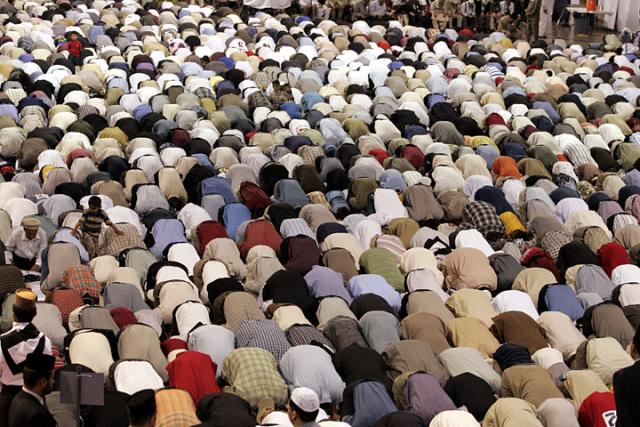
Talk about harmonic convergence! On my way to work yesterday I was listening to Johnny Cash singing “The Kneeling Drunkard’s Plea” (one of my very favorite song titles, btw). Just a little bit later that day I was asked why there is no kneeling/prostration in Jewish tradition. (Coincidence? I think not…)

I explained that Jews traditionally prostrate themselves only once a year on the High Holidays. But it’s interesting question that I’ve never really stopped to ponder: why is prostration is so relatively rare in Judaism as opposed to Islamic or Christian tradition?

Kneeling and prostration is actually quite common in the Torah (where it is not at all uncommon for major characters tend to “fall on their faces” before God) but it was never universally embraced as a regular practice by rabbinical authorities. With the notable exception of Maimonides, most medieval Jewish authorities discouraged regular kneeling/prostration during the Middle Ages – most likely in order to differentiate Judaism from Christianity and Islam. While bowing from the knees is common in Ashkenazic Jewish tradition (i.e. in the daily Amidah or Aleinu prayers) kneeling or full prostration occurs only during Rosh Hanshanah Musaf and Yom Kippur Avodah services – and then only among more observant Jews.

With the current growth of Jewish yoga, it’s somewhat inevitable that we’re now witnessing prostration being reconsidered in new ways. (Just a cursory web search, for instance, reveals the work of Daniel Gigi, who seems to have developed an extensive synthesis of yoga and Jewish mysticism, including a technique he calls the “13 Point Prostration.”)  I still remember well that two years ago, during JRC’s observance of the once-in-twenty-eight-years celebration of Birkat Hachamah, we held a wonderful service that combined sunrise meditations, yoga sun salutations and traditional Jewish prayers.

Our cantor and I perform the High Holiday service prostrations ourselves (but for obvious reasons we never really know how many congregants follow our example). For myself, I find something enormously powerful about the physicality of bowing down to the floor. It is truly the most universally humbling of gestures – a simple yet profound way to emptying one’s ego and acknowledge the presence in the universe of a power greater than oneself.

We Are All Strangers Here

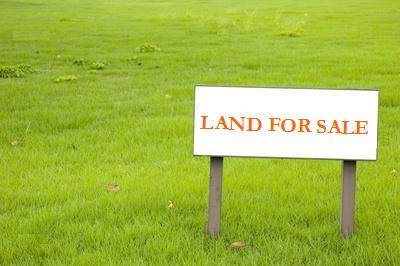
“But the land must not be sold beyond reclaim, for the land is Mine; you are but strangers resident with me.” (Leviticus 25:23)

In this verse, which comes from this week’s Torah portion Behar, God makes it clear to the Israelites that the land they are about to enter is not to be sold in the conventional manner. God is the ultimate “owner” of the land – thus the Israelites are cautioned they cannot treat it as private property. The Israelite residents are akin to resident aliens who are entrusted with the use of the land; however, since land was going to be “bought” and “sold,” this verse prohibits any purchase or sale to the exclusion of a claim of ownership

The land in Mine and you are but resident aliens…  The land, this earth, the very ground upon which we make our homes, does not ultimately belong to us. We are but strangers upon it – or at best we’re merely “leasing” it temporarily from God.  In just about every respect, this is truly a radical teaching. Indeed, if we broaden our understanding of this commandment beyond the milieu of Ancient Israel, it certainly carries a myriad of powerful economic, political and environmental implications.

It also has profound spiritual significance as well. In the words of Madeleine L’Engle:

We are all strangers in a strange land, longing for home, but not quite knowing what or where home is. We glimpse it sometimes in our dreams, or as we turn a corner, and suddenly there is a strange, sweet familiarity that vanishes almost as soon as it comes.

The Torah of Steve Earle

The release of a new Steve Earle CD is always a pretty big deal for me – and I’m really loving his latest, “I’ll Never Get Out of This World Alive.”

Amidst great tunes about the BP oil spill, NOLA after Katrina, and the hubris of Empire is a song Earle wrote for Joan Baez some years back called “God is God.” Give a listen: it’s about as humble and lovely a spiritual statement as you’ll ever hear sung by a radical leftist country singer:

I believe in prophecy
Some folks see things not everybody can see
And once in a while they pass the secret along to you and me
And I believe in miracles
Something sacred burning in every bush and tree.
We can all learn to sing the songs the angels sing
Yeah I believe in God and God ain’t me

I’ve traveled around the world,
Stood on mighty mountains and gazed across the wilderness
Never seen a line in the sand or a diamond in the dust
And as our fate unfurls
Every day that passes I’m sure about a little bit less.
Even my money keeps telling me it’s God I need to trust
And I believe in God but God ain’t us

God of my little understanding. Don’t care what name I call
Whether or not I believe doesn’t matter at all
I receive the blessings
And every day on Earth’s another chance to get it right
Let this little light of mine shine and rage against the night
Just another lesson
Maybe someone’s watching and wondering what I got
Maybe this is why I’m here on Earth and maybe not
But I believe in God and God is God