God Considers the Generation of Noah

the earth is filled with it
creation’s choking on it
gone horribly wrong the bloodshed so much
blood soaking the earth polluting
the earth cries out to me shrieking
just shrieking out to me i can’t stand it
any more i can’t think i can’t
hear myself think what was i
thinking what was i thinking
i am undone i
will undo tear down the
firmament open up the
floodgates let the waters
let chaos rain down
let the dark waters below
rise up let’s undo creation
wash the earth clean what have i
done
seemed like such a good
good idea at the
time

(Genesis 6:11-12, 7:11)

In the Beginning, In God’s Image

Rabbi Akiva says: “‘Love your fellow as yourself'” (Leviticus 19:18), is the greatest principle of the Torah.

Ben Azzai says, “‘When God created man, He made him in the image of God’ (Genesis 5:1) is the greatest principle in the Torah. You should not say: Because I have been dishonored, let my fellow be dishonored along with me…”

Rabbi Tanhuma explained: “If you do so, know whom you are dishonoring – ‘He made him in the image of God.'”

Midrash Genesis Rabbah 24

In this classic Midrash, Rabbis Akiba and Ben Azzai are doing what Talmudic rabbis do best: playing a lively game of spiritual oneupsmanship. The question at hand: what is the central value of Torah?  According to Akiba it is the famous verse from Leviticus, “Love your neighbor as yourself.” Ben Azzai counters with the insight from this week’s Torah portion: humanity was created in God’s image.

Rabbi Tanhuma’s final statement reinforces the weakness of Akiba’s claim: though it is certainly praiseworthy to love your fellow as yourself, this might imply that you only need to treat your fellow as well (or as badly) as you yourself are treated. Ben Azzai points out that if we truly understand that all people are made in the image of God, we must accept that any time we shame, insult or abuse another, we do the same to God.

In a sense, Ben Azzai raises the moral stakes of the equation. As the saying (often misattributed to Dostoevsky) goes: “where there is no God, all is permitted.” This drives home the radical imperative made clear in the very first chapter of Genesis: if all people are made in the divine image, all people are of infinite worth; all people are deserving of dignity, respect and fair treatment.

The Torah thus begins with this foundational principle, which has both interpersonal/ethical as well as global/moral implications. As we start Torah anew yet again, we return to its central question: how can we find the wherewithal to treat everyone we meet as a fellow child of God? How can we, as Americans, as Jews, as global citizens find dignity and respect for all who dwell on earth?

A Poem for Sukkot: The Season Turns

It’s the festival of Sukkot – the holiday in which we (among many other things) liturgically chant from the book of Ecclesiastes.

Here, below, is my new version of the most famous part: Chapter 3, verses 1 through 8.

Kohelet 3:1-8

an eon turns to a millisecond
swing from here and to
there keeping rhythm here
to there and back again we are
born and we
die we plant and
we uproot
we kill we heal we
destroy and we rebuild again
we cry out and we laugh to the high
high heavens we throw stones and
gather them up once
more we embrace and we turn
away cast our eyes down
down to the ground we seek and
we lose we may yet find we
hoard and we purge we tear
and then sew back up we hold our tongues
and we scream like rain
we’re spitting in the wind
such a fine fine line between
love and hate and war
and peace enjoy it
while you can

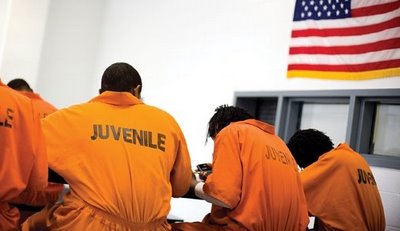
Locking Our Children Away: Sermon for Erev Yom Kippur 5772

Cedric Cal was born to a single mother, in a family that lived below the poverty line on Chicago’s West Side. His father had left the family, married another woman and had very little to do with him. His mother Olivia worked constantly, doing her best to keep her family together. As the oldest of four, Cedric became the de facto father of the family and was entrusted with protecting his younger brother, who was legally blind.

Cedric’s family moved around a lot and he learned very early on how to make friends quickly. He liked sports, particularly baseball – and when his family lived on the West Side, he played sports in the local Park District. When they moved to the South Side, however, there were no Park District services available, so sports were not an option for him. Still, no matter where they moved, Olivia became very adept at finding ways of getting Cedric and and brothers into decent public schools. From 5th to 8th grade, he attended Alcott Elementary. Minding his younger brother, he took the public bus every day on a long trek from the West Side to Lincoln Park.

Cedric’s mother taught him how to fill out applications and interview for jobs, but there really weren’t any to be found. And those that were hiring certainly weren’t hiring African-American teenage boys. He was never really successful at finding a real job,  but when he was 14 he learned that he could make money dealing drugs. He knew that his mother would be beyond furious if she ever found out, so he made sure to keep his drug dealing and his growing gang activity secret from her. Cedric never, ever, brought his earnings into their home – his mother had made it clear that drug money was not welcome anywhere near her house. Even when he bought a car, he parked it far away from their home.

I met and spoke with Cedric two weeks ago at the Stateville Correctional Center in Joliet. He explained to me that as he continued to sell drugs, as he continued the gang life, little by little, he became “desensitized to the things my mother had taught me.” It was quite poignant and sweet to listen to Cedric speak about his mother. “My mother,” he said, “has a lovely spirit,” adding: “I was scared to death of my mother.” He told me of one instance in which Olivia confronted drug dealers on a street corner with a two by four in her hand. Cedric laughed and said that could scare even the toughest gang members in the neighborhood.

Continue reading