Rabbi Lynn Gottlieb: A Prayer in the Aftermath of the Boston Marathon Bombing

boston-marathon-child

From the always eloquent Rabbi Lynn Gottlieb:

To cities and neighborhoods everywhere throughout the world, whose people suffer the aftermath of violent acts and face the carnage unleashed by all manner of exploding devices, we cry in anguished lament.

To the first responders who jump over barricades and cross fields of fire to rescue the wounded, may your acts of courageous compassion be received as a divine blessing. You are the guardians of healing.

And may all of us who have the strength, honor the people of destroyed cities and the first responders in their midst by pursuing healing and restorative justice with every nonviolent means at our disposal.

a psalm 150 slam

photo: Stewart Martin

photo: Stewart Martin

shout your praise with every
thing you have with everything
you own scream out praises with
howling bursts of laughter rising
soaring arias of gratitude shrey
out praise sobbing
wailing beat your
breast like a broken shattered
timbrel dance all you
insomniacs wearing your
tangled twisted sheets like holy robes let
every living breathing roaring
writhing spitting breath
sing praises can i get a
halleluyah

All are Welcome Here

Occupy Wall St. Kol Nidre 2011 (photo by David A.M. Wilensky)

Some more of my new liturgy for the High Holidays. This one is an introduction to Kol Nidre:

Time now to summon the truth
that lies in the space between
our most exalted selves and
our darkest inclinations.

Time now to give each another permission
to open wide our hearts
and enter this most holy of holy places.
To bare our pain,
admit promises unkept, vows broken
and faith betrayed.

Within this sacred space in between
all are welcome:
the proud and the shamed,
those who fought their way
to the front of the line
and those left behind;
the joyful souls that sing out praises
and the wounded hearts that cry out
their pain.

Yes, you are welcome here.
In the space between the brightest day
and the darkest night
there is room
for all.

who shall live and who shall die

I see you standing there alone

eyes searching through the blankness
of a year stretching limitlessly on like a
book waiting to be written.

Don’t bother glancing behind.
Don’t pretend you’re unaware
that in a year’s time
a world can be shattered
or born anew.

Just gaze forward
and we’ll ask the questions together:
Will it be a year of curse
or a year of blessing?
Of wounding or
of healing?

Throw open your hands and
let your hopes and fears fly out
past the blank pages
of a year yet to be.
Dare to believe that we will all
be written for blessing in
the Book of Sweet, Sweet Life.

Now close your eyes and we’ll send off
this one audacious prayer:
May the new year bless us
with health, wholeness,
and peace.

A Song of Ascents for Rosh Hashanah

My new take on Psalm 126 – it feels just right for Rosh Hashanah.

Shanah Tovah U’Metukah – May you and may we all be blessed with a sweet and renewing New Year!

Psalm 126
My song of assent
I will return from this exile
wake up
from this bad dream
my crazy laughter’s busting out
I’m learning to sing
all over and over and over
again
only now do I know
you were there all along
coaxing me along to this
place of my return oh yes
you’ll bring me home
like water
roaring down dry river beds
I’ll be coming home
those who sowed with tears
will reap with joy
those who bury their pain deep
will soon gather
their bountiful harvest

“The Interrupters”: This is Prayer in Action

Just saw “The Interrupters” – a new documentary that highlights the work of “CeaseFire,” an organization that works indefatigably to reduce urban violence in Chicago. I’m still sorting through the experience: it’s quite simply one of the most spiritually, politically and ethically powerful films I’ve ever seen.

I won’t say much more except that you need to find out when “The Interrupters” is coming to your town right now. (Chicago residents: it’s currently playing at the Wilmette Theater through Sept. 1.)

In the meantime, click above to see one of the many memorable scenes from the film. This is the force-of-nature-amazing Ameena Matthews – the daughter of a notorious Chicago gang leader and former drug ring enforcer who has found courage and strength in her Muslim faith and now works as a CeaseFire “Interrupter.” Here she leads a neighborhood prayer vigil for a young boy who was killed in the crossfire of gang violence – then confronts friends who are seeking revenge for his death.

Now this is prayer in action…

Inner Jacob, Inner Israel

How fair are your tents, O Jacob/Your dwellings, O Israel! (Numbers 24:5)

These words, uttered by the ersatz prophet Balaam in praise of the Israelites, come from this week’s Torah portion, Balak, but are best known as the opening line of the well-known morning prayer, “Mah Tovu.”

If you read this verse carefully, you’ll notice that it essentially expresses the same idea twice, using different words and images. Literarily speaking, this is known as “a couplet,” and is considered a defining feature of Biblical poetry. Commenting on this phenomenon, Biblical literary scholar Robert Alter has observed that “there is a characteristic movement of meaning” from first half of the couplet to the second. (“The Art of Biblical Poetry,” p. 19)

Indeed, over the centuries Biblical commentators have parsed poetic verses by comparing the subtle differences between the first and second halves of a given couplet. In the case of this famous verse, the juxtaposition of Jacob with his “alter ego” Israel has given rise to some rich homiletical interpretation.

Reb Rachel Barenblat, for instance, offers this wonderful insight:

In this synechdoche, the patriarch symbolizes the whole. Jacob is the earthly, embodied side of the patriarch, the aspect that inhabits physical spaces. Israel is the other side of the coin, the part of the patriarch which wrestled with the angel of God and came away blessed. Where Jacob has tents, Israel has dwellings — in Hebrew, Israel has mishkanot, like the holy dwelling-place of the indwelling Shekhinah.

Each of us is both Jacob and Israel; we have Jacob-ness and Israel-ness in ourselves. And each of us can make the leap from inhabiting a tent to inhabiting a dwelling-place. When we wrestle and dance and dream with Torah, we transform ourselves from worldly Jacob to engaged Israel, and we embody Balaam’s blessing.

For my part, I find myself returning to the image of Jacob as “wanderer.” In his childhood, he is described as “ish tam yoshev ohalim” – “a simple man who dwelt in tents.” (Genesis 25:27) Tents are by their nature temporary dwellings; and indeed Jacob will eventually spend most of his life wandering/fleeing/returning/departing.

The name Israel, on the other hand, represents “home.” Even in the midst of his wanderings, Jacob/Israel will experience reconciliation (with his brother Esau), reunion (with his son Joseph) and at the end of his life, homecoming, when he is taken from Egypt and buried in the cave of his ancestors: “he drew his feet into the bed and, breathing his last, he was gathered to his people.” (Genesis 49:33)

As Reb Rachel points out, both Jacob and Israel are indelibly imprinted upon our spiritual psyches. We are forever setting out and we are forever coming home – life is an endless cycle of wandering and homecoming. And so it must be: if it were exclusively the former, we’d be eternally lost; if only the latter, our spiritual lives would become complacent and stagnant.

Here, then, is yet another way to understand Balaam’s blessing: that we may experience the divine presence in our going forth and in our coming home.

How to Pray, 21st Century Style


I’m sorting through tons of poems to include in our High Holiday supplements and discovering some really wonderful stuff. Can’t resist sharing this one:

Pray for Peace

by Ellen Bass

Pray to whomever you kneel down to:
Jesus nailed to his wooden or plastic cross,
his suffering face bent to kiss you,
Buddha still under the bo tree in scorching heat,
Adonai, Allah. Raise your arms to Mary
that she may lay her palm on our brows,
to Shekhina, Queen of Heaven and Earth,
to Inanna in her stripped descent.

Then pray to the bus driver who takes you to work.
On the bus, pray for everyone riding that bus,
for everyone riding buses all over the world.
Drop some silver and pray.

Waiting in line for the movies, for the ATM,
for your latte and croissant, offer your plea.
Make your eating and drinking a supplication.
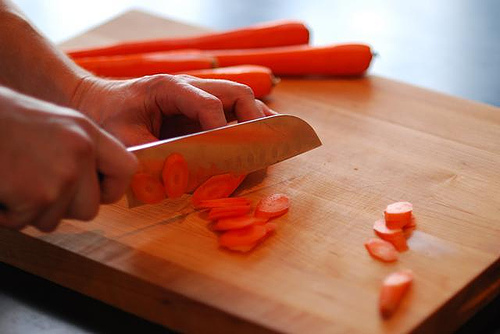
Make your slicing of carrots a holy act,
each translucent layer of the onion, a deeper prayer.

To Hawk or Wolf, or the Great Whale, pray.
Bow down to terriers and shepherds and Siamese cats.
Fields of artichokes and elegant strawberries.

Make the brushing of your hair
a prayer, every strand its own voice,
singing in the choir on your head.
As you wash your face, the water slipping
through your fingers, a prayer: Water,
softest thing on earth, gentleness
that wears away rock.

Making love, of course, is already prayer.
Skin, and open mouths worshipping that skin,
the fragile cases we are poured into.

If you’re hungry, pray. If you’re tired.
Pray to Gandhi and Dorothy Day.
Shakespeare. Sappho. Sojourner Truth.

When you walk to your car, to the mailbox,
to the video store, let each step
be a prayer that we all keep our legs,
that we do not blow off anyone else’s legs.
Or crush their skulls.
And if you are riding on a bicycle
or a skateboard, in a wheelchair, each revolution
of the wheels a prayer as the earth revolves:
less harm, less harm, less harm.

And as you work, typing with a new manicure,
a tiny palm tree painted on one pearlescent nail
or delivering soda or drawing good blood
into rubber-capped vials, writing on a blackboard
with yellow chalk, twirling pizzas–

With each breath in, take in the faith of those
who have believed when belief seemed foolish,
who persevered. With each breath out, cherish.

Pull weeds for peace, turn over in your sleep for peace,
feed the birds, each shiny seed
that spills onto the earth, another second of peace.
Wash your dishes, call your mother, drink wine.

Shovel leaves or snow or trash from your sidewalk.
Make a path. Fold a photo of a dead child
around your VISA card. Scoop your holy water
from the gutter. Gnaw your crust.
Mumble along like a crazy person, stumbling
your prayer through the streets.

Downward Facing Jews

Talk about harmonic convergence! On my way to work yesterday I was listening to Johnny Cash singing “The Kneeling Drunkard’s Plea” (one of my very favorite song titles, btw). Just a little bit later that day I was asked why there is no kneeling/prostration in Jewish tradition. (Coincidence? I think not…)

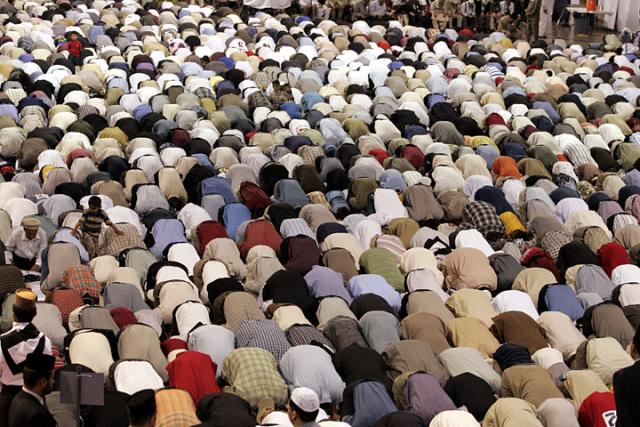
I explained that Jews traditionally prostrate themselves only once a year on the High Holidays. But it’s interesting question that I’ve never really stopped to ponder: why is prostration is so relatively rare in Judaism as opposed to Islamic or Christian tradition?

Kneeling and prostration is actually quite common in the Torah (where it is not at all uncommon for major characters tend to “fall on their faces” before God) but it was never universally embraced as a regular practice by rabbinical authorities. With the notable exception of Maimonides, most medieval Jewish authorities discouraged regular kneeling/prostration during the Middle Ages – most likely in order to differentiate Judaism from Christianity and Islam. While bowing from the knees is common in Ashkenazic Jewish tradition (i.e. in the daily Amidah or Aleinu prayers) kneeling or full prostration occurs only during Rosh Hanshanah Musaf and Yom Kippur Avodah services – and then only among more observant Jews.

With the current growth of Jewish yoga, it’s somewhat inevitable that we’re now witnessing prostration being reconsidered in new ways. (Just a cursory web search, for instance, reveals the work of Daniel Gigi, who seems to have developed an extensive synthesis of yoga and Jewish mysticism, including a technique he calls the “13 Point Prostration.”)  I still remember well that two years ago, during JRC’s observance of the once-in-twenty-eight-years celebration of Birkat Hachamah, we held a wonderful service that combined sunrise meditations, yoga sun salutations and traditional Jewish prayers.

Our cantor and I perform the High Holiday service prostrations ourselves (but for obvious reasons we never really know how many congregants follow our example). For myself, I find something enormously powerful about the physicality of bowing down to the floor. It is truly the most universally humbling of gestures – a simple yet profound way to emptying one’s ego and acknowledge the presence in the universe of a power greater than oneself.