We Are Climbing Jacob’s Vortex

jacob came upon a certain place and
stopped there for the night for
the sun was setting he took a
stone placed it against
his head and lay down in
his dream he saw a ladder set
on the earth its top reached the heavens
angels going up and down according to
freud don’t call it jacob’s ladder he’d probably call
it jacobs phallus after all he’s reckoning with his childhood
passion to please his mother just look where
that got him and according to jung the
ladder is the axis of communication between jacob’s ego
and self in other words he’s building a stairway
from lower to higher realms of
consciousness the hindus might say
the stone on jacob’s head opened his anja
chakra did you know that spiritual
energy from external environments enter your
body through this gateway and did you also
know that this spot corresponds to
the pineal gland which descartes believed
was the seat of the soul and the
point of connection between body and
the intellect or maybe this certain place was a
vortex and when his head rested upon
it earth energy spiraled up whirling
toward the open heavens then came roaring
back down whispering i am
with you i will protect you wherever you
go i promise

(Genesis 28:11-15)

In the Beginning, In God’s Image

Rabbi Akiva says: “‘Love your fellow as yourself'” (Leviticus 19:18), is the greatest principle of the Torah.

Ben Azzai says, “‘When God created man, He made him in the image of God’ (Genesis 5:1) is the greatest principle in the Torah. You should not say: Because I have been dishonored, let my fellow be dishonored along with me…”

Rabbi Tanhuma explained: “If you do so, know whom you are dishonoring – ‘He made him in the image of God.'”

Midrash Genesis Rabbah 24

In this classic Midrash, Rabbis Akiba and Ben Azzai are doing what Talmudic rabbis do best: playing a lively game of spiritual oneupsmanship. The question at hand: what is the central value of Torah?  According to Akiba it is the famous verse from Leviticus, “Love your neighbor as yourself.” Ben Azzai counters with the insight from this week’s Torah portion: humanity was created in God’s image.

Rabbi Tanhuma’s final statement reinforces the weakness of Akiba’s claim: though it is certainly praiseworthy to love your fellow as yourself, this might imply that you only need to treat your fellow as well (or as badly) as you yourself are treated. Ben Azzai points out that if we truly understand that all people are made in the image of God, we must accept that any time we shame, insult or abuse another, we do the same to God.

In a sense, Ben Azzai raises the moral stakes of the equation. As the saying (often misattributed to Dostoevsky) goes: “where there is no God, all is permitted.” This drives home the radical imperative made clear in the very first chapter of Genesis: if all people are made in the divine image, all people are of infinite worth; all people are deserving of dignity, respect and fair treatment.

The Torah thus begins with this foundational principle, which has both interpersonal/ethical as well as global/moral implications. As we start Torah anew yet again, we return to its central question: how can we find the wherewithal to treat everyone we meet as a fellow child of God? How can we, as Americans, as Jews, as global citizens find dignity and respect for all who dwell on earth?

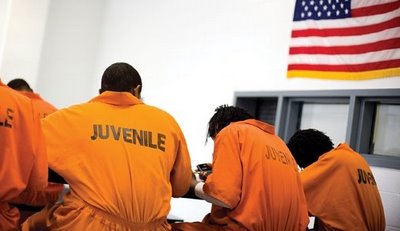
Locking Our Children Away: Sermon for Erev Yom Kippur 5772

Cedric Cal was born to a single mother, in a family that lived below the poverty line on Chicago’s West Side. His father had left the family, married another woman and had very little to do with him. His mother Olivia worked constantly, doing her best to keep her family together. As the oldest of four, Cedric became the de facto father of the family and was entrusted with protecting his younger brother, who was legally blind.

Cedric’s family moved around a lot and he learned very early on how to make friends quickly. He liked sports, particularly baseball – and when his family lived on the West Side, he played sports in the local Park District. When they moved to the South Side, however, there were no Park District services available, so sports were not an option for him. Still, no matter where they moved, Olivia became very adept at finding ways of getting Cedric and and brothers into decent public schools. From 5th to 8th grade, he attended Alcott Elementary. Minding his younger brother, he took the public bus every day on a long trek from the West Side to Lincoln Park.

Cedric’s mother taught him how to fill out applications and interview for jobs, but there really weren’t any to be found. And those that were hiring certainly weren’t hiring African-American teenage boys. He was never really successful at finding a real job,  but when he was 14 he learned that he could make money dealing drugs. He knew that his mother would be beyond furious if she ever found out, so he made sure to keep his drug dealing and his growing gang activity secret from her. Cedric never, ever, brought his earnings into their home – his mother had made it clear that drug money was not welcome anywhere near her house. Even when he bought a car, he parked it far away from their home.

I met and spoke with Cedric two weeks ago at the Stateville Correctional Center in Joliet. He explained to me that as he continued to sell drugs, as he continued the gang life, little by little, he became “desensitized to the things my mother had taught me.” It was quite poignant and sweet to listen to Cedric speak about his mother. “My mother,” he said, “has a lovely spirit,” adding: “I was scared to death of my mother.” He told me of one instance in which Olivia confronted drug dealers on a street corner with a two by four in her hand. Cedric laughed and said that could scare even the toughest gang members in the neighborhood.

Continue reading

The Season of Our Service: Sermon for Erev Rosh Hashanah 5772

As my Torah study students will attest, the book of Deuteronomy can be pretty tough stuff. Deuteronomy, of course, is the final book of the Torah, and most of it is a monologue delivered by Moses to the Israelites before they cross into the Promised Land. As Moses is about to die, he engages in a kind of review lesson for the people, relating their history, describing their journey and reminding them of the laws they have agreed to as part of their covenant with God.

This last part – the theological emphasis on the covenant – is a major theme in Deuteronomy. Over and over, God tells the Israelites through Moses: “You’re about to enter the Land. Just follow my laws and you’ll be fine. But break them and you’ll be very, very, sorry.”

It’s really not to hard to discern these theological threats throughout Deuteronomy– in fact we read them over and over and over again. God tells the Israelites that a deal’s a deal – and they had better hold up their end or else. And of course the “or else” is spelled out repeatedly – often in gruesomely vivid detail.

Now, of all the laws contained in this covenant, there is one in particular that God seems particularly uptight about: that is, namely, the law against worshiping other gods. That’s not to say God isn’t concerned about laws such as murder, theft, providing for the poor, caring for the stranger… While these kinds of laws are certainly mentioned, the stakes always seem to be the highest when it comes to the commandment against idolatry – against serving gods of foreign nations.

Continue reading

More Poetry for Elul

From the great Canadian-Jewish poet, Shulamis Yelin (1913-2002):

In your image,
in your image, God,
You made me in your image,
and I reach upward, seeking –
to be like You, God.

Just? Like You I’m vengeful.
Merciful? Like You I seek an understanding heart.
Jealous? Yes, I’m jealous
and iniquitous
and long suffering –
and like You
I dream to make a world,
(in miniature, God),
to do my bidding.

And loving I can be, yes, loving,
to a penitent, punished child.

Yet clearly, God, most clearly,
do I see in me your oneness,
your all-oneness,
your aloneness –
in my heart.

A Meditation for Elul: Yes, God Loves You

As I mentioned in a previous post, during the month of Elul, I’ll be offering occasional “Elul Meditations” that I hope will help with your spiritual preparation for the Days of Awe. This one is an excerpt from a Rosh Hashanah sermon I gave ten years ago entitled “The Season of Our Loving.”

If we don’t relate to a personal, supernatural God on High, what could it possibly mean to pray prayers that say “God loves us?”  Maybe – just maybe – it means that our love for one another is but a hint of something much greater: an infinite place of unconditional love that pervades the universe. Perhaps the simplest way we experience God’s love is when we look into the eyes of our own loved ones. I am reminded of Jacob’s unbearably touching words, the words that come when he finally reconciles with his beloved brother Esau: “to see your face is to see the face of God.” Could it be possible that when we love another, we are tapping into a well that connects us with a transcendent love greater than anything we can possibly imagine?

Ahavat Olam – “with an unending love you love us, Adonai, our God.” I understand this prayer as much more than simply a tribal statement of faith about God’s exclusive gift of Torah to the people Israel. At its most profound level, this prayer expresses our sense that there is a source of unconditional love that surrounds all peoples always – an “Ahavat Olam.” It is reflected in our love for one another, but it is not ultimately dependant upon it. For if love is only a transient feeling or sensation, then it is not truly eternal. Perhaps when we say “God loves us,” we are simply saying that this life force – this love force – is an elemental part of our lives and our world. Like the love we share with true loved ones, it has a transformative power. It connects us in a profound way. It protects and validates us. It helps us to overcome our solitariness. It keeps us safe.

Deuteronomist Theology: A Katrina Test Case

In almost every portion of Deuteronomy we read an impassioned expression of a unique theology. Boiled down to its barest essence, it can summed up as follows: “You’re about to enter the Land. Just follow my laws and you’ll be fine. But break them (particularly the ones about serving other gods) and you’ll be very, very, very sorry.”

This week’s portion, Parashat Eikev, is no exception:

If, then, you obey the commandments that I enjoin upon you this day, loving the Eternal you God and serving God with all your heart and soul, I will grant the rain for your land in season, the early rain and the late. You shall gather in your grain and wine and oil – I will also provide grass in the fields for your cattle – and thus you shall eat your fill. Take care not to be lured away to serve other gods and bow to them. For the Eternal’s anger will flare up against you, shutting up the skies so that there will be no rain and the ground will not yield its produce; and you will soon perish from the good land that the Eternal is assigning to you. (Deuteronomy 11:13-17)

I know that many regard the theology of Deuteronomy, with its image of a threatening God and its simplistic “play by my rules and no one gets hurt” message to be painfully primitive –  even morally problematic. To a certain extent I would certainly agree. However I would also add that Deuternomomistic Theology can not so easily be dismissed.

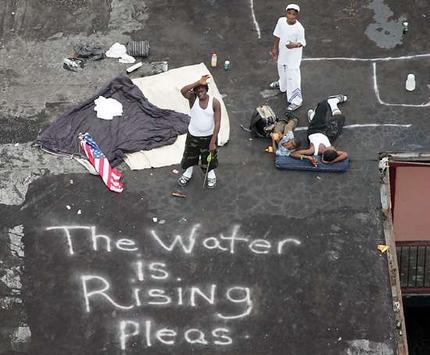
Let’s use a very recent incident: namely, Hurricane Katrina – as an example.

Following this tragic disaster, it wasn’t long before religious fundamentalists piously proclaimed Katrina to be “God’s judgement” upon the “moral sins” of New Orleans (or in some cases, America at large).  This literalist interpretation of the Bible; this victim-blaming for moralistic/political purposes represents the theology at its very worst – and I have no trouble saying so.

However, while this theological approach might fall short as a way to explain random natural disasters, it does serve an important purpose in a different regard: it provides an important reminder of collective responsibility.

After all, beyond all the nasty divine threats in Deuteronomy, there is a more profound underlying message: in society, our choices matter. Regardless of what we believe about God, we cannot ignore the message that our collective actions have very real consequences for ourselves and our world.

So, for example, while many of us refuse to accept that Katrina was a punishment for homosexuality, et al, we cannot deny that much of this tragedy was indeed a result of human failure: for example, the failure of our government to heed reports recommending the repair of decrepit levees, the failure of local, state and national agencies to respond to the disaster promptly and properly, the failure of agencies to keep their promises to aid in rebuilding efforts, etc.

At the end of the day, Deuteronomy’s theology is rooted in the concept of covenant – and more specifically, covenental responsibility. Even if we don’t agree with the literal terms of this covenant as understood by its ancient Near Eastern author, we can still uphold the its essential ideal:

Unless we take our collective responsibility to one another and our world seriously, we may well “perish from the good land” upon which we live.

The Shema: A Parsing

Listen Israel, “YHVH is our God, YHVH is One!” (Deuternomy, 6:4)

Listen Israel:  The most central prayer in Jewish tradition is not a prayer at all. Prayers by definition are directed to God. These words are directed collectively inward. They indicate that we are about to read a statement of faith, of purpose, a sacred mission statement, if you will.

YHVH is our God: “YHVH” is God’s ineffable name, the unpronounceable, unknowable proper name of the God that in ancient times, the Israelite nation claimed as its own.

Indeed, in the theological marketplace of the ancient Near East, every nation had its own national god.  In its original context, then: “Listen, Israel, there may be many gods from which to choose, out there, but YHVH is our god.”

ADONAI is One!: Some choose to translate the word“echad” (“one”) as “alone.” This suggests an imperative: the Israelites must worship YHVH as God and no other.

Others understand this phrase as a statement of theological chutzpah. According to this reading, “YHVH is One”  means that there actually is none else: “You know those other deities the nations call “gods?” Well they’re not actually gods at all. At the end of the day, Israel’s god is the only God there is.”

Religious exceptionalism? Some might choose read these words that way. But on a much deeper level, the words “YHVH is One” express a profoundly universal world view. Our sacred mission statement is a reminder that while we live in a universe of diversity and multiplicity, this variety is ultimately part of a much larger sublime Unity that moves through us all.

Parsed thus:

Listen! Amidst the raucous, cacophony that resounds throughout our world, we may yet discern one Voice ever calling to us.  This voice goes by many names; we call it YHVH. Let us attune ourselves to it with all our heart, all our soul, and all our might.,.

Reedeming Pinchas: Repairing the Irreparable

“Phineas Slayeth the Celebrants” (Avi Katz)

Here’s the story of Pinchas, title character of this week’s Torah portion:

While sojourning in Shittim, the Israelites profane themselves by consorting with Moabite women who invite them to make sacrifices to their god. Incensed, God orders Moses to have all the ringleaders impaled – but just as Moses issues the order, an Israelite chieftain and a Midianite princess cohabit in full view of the Israelite community.

In response, Pinchas, (the grandson of Aaron the High Priest) steps forward and stabs both of them through the belly, thus saving the Israelites from a plague (which had resulted, presumably, from God’s wrath.)  God extols Pinchas for his zealousness and grants him and his descendants a “covenant of peace” (brit shalom) – a pact of priesthood for all time.

Horrified? I don’t blame you. There’s no use sugar coating it: this week’s Torah portion sanctions xenophobia, intolerance, and murderous religious zealotry.

Still, over the centuries, some commentators have had a field day with Parashat Pinchas, attempting to somehow redeem the inherent nastiness of the story. According to the Talmud, for instance, if Pinchas had asked the rabbinical court to legally sanction his killing, the court would have responded, (in true Talmudic fashion), “the law may permit it, but we do not follow that law!” (BT Sanhedrin 82a)  The Chatam Sofer (Hungary, 19th c.) views God’s pact of priesthood with Pinchas less as a reward for his zealousness than as a corrective to it: “(Pinchas) will have to cure himself of his violent temper if he is to function as a priest.” (Eytz Hayyim, p. 918)  In a contemporary reading of the portion, Rabbi Arthur Waskow suggests that Pinchas’ extreme actions shocks God into an act of teshuvah (repentance), causing God to end the deadly plague and pursue a covenant of peace.

While I’m taken by the exegetical brilliance of some of these interpretations, I confess that none of them really solve the essential problem for me. At the end of the day, I’m not sure that any interpretation, no matter how intellectually dazzling, can compete with the raw, literal power of a story that promotes murderous zealotry in God’s name. Or to put it in neurological terms: I’m not sure that the intellectual, left brain approach to Pinchas can ever truly redeem what is essentially a visceral, lizard-brain story. On the contrary, when we try too hard to explain away the more disturbing elements of Torah, we sometimes end up doing the exact opposite: words upon words of interpretation often merely shine a light on these troubling elements all the more.

In contrast to the countless pages of commentary generated by this story, the most redemptive interpretation I know actually comes in the form of one tiny letter. In the Masoretic text of the Torah scroll, the word “Shalom” in the term “brit shalom” is written with a broken letter vav. (Vav, of course, is also one of the letters in God’s name, YHVH.)

For me, at least, this still, small suggestion of irreparable brokenness says more than a thousand words of commentary. In one short pen stroke, the message is driven home: this broken “covenant of peace” is no peace at all. This broken God that requires murderous zealotry of humanity is no God at all. No rationalizing, no explaining away can truly repair the essential brokenness of this story.

Yes, perhaps this one letter is all the interpretation we need: certain stories, certain ideas, certain acts are simply too broken to be redeemed. And all the rest, as they say, is commentary…

Gallup: Americans Still Believe!


Just ran across a recently released Gallup poll that indicated more than nine in ten Americans continue to believe in God.

Among the myriad findings of the poll, these caught my eye in particular:

– The percentage of Americans who say “yes” when asked if they believe in God has remained more or less steady since the 1940s.

– Given the ability to express doubts about their beliefs, the percentage who profess certainty in God’s existence drops into the 70% to 80% range.

– When Americans are given the choice between saying belief in God or in “a universal spirit or higher power,” 80% choose the former and about 12% opted for the latter.

– Although the percentage of God-fearing Americans is relatively high, the number of Americans who identify with a particular religion has dropped. Throughout the 1950s, almost all Americans identified themselves with a particular religion. In recent years, more than 1 in 10 Americans report they have no formal religious identity.

– Those under 30 are significantly less likely than older Americans to say they believe in God.

– Regionally, the data confirm the religious potency of the “Bible Belt,” with Southerners 10 points more likely than Easterners to say they believe in God.

For comparison purposes, Salon Magazine measured these numbers with similar polls in Canada and Europe, further reinforcing the commonly-held assumption that Americans are among the most faithful citizens on earth:

A 2003 Gallup poll, which looked into the role of religion in the U.K., the U.S. and Canada, found that when asked about the importance of religion in their own lives, 83 percent of Americans said it is either “very important” (60 percent) or “fairly important” (23 percent). Those numbers take a dive north of the border: 62 percent of Canadians said religion is very important (28 percent) or fairly important (34 percent) to them. In Great Britain, however, less than a majority — 47 percent — said that religion is important in their lives. Only 17 percent of Britons consider it very important, and 30 percent feel it is fairly important.

– The most recent  Eurostat Eurobarometer study  by the European Commission was conducted in 2005. It found that 52 percent of European Union citizens responded that “they believe there is a God;” 27 percent said “they believe there is some sort of spirit or life force” and 18 percent said that “they do not believe there is a spirit, God, nor life force.”

– The same European survey showed Turkey and Malta to be the only European countries on par with America’s figure of over 90 percent of citizens believing in God.

– 38 percent of British respondents to the Eurobarometer survey said they believed in God, as did 34 percent of French respondents.