who shall live and who shall die

I see you standing there alone

eyes searching through the blankness
of a year stretching limitlessly on like a
book waiting to be written.

Don’t bother glancing behind.
Don’t pretend you’re unaware
that in a year’s time
a world can be shattered
or born anew.

Just gaze forward
and we’ll ask the questions together:
Will it be a year of curse
or a year of blessing?
Of wounding or
of healing?

Throw open your hands and
let your hopes and fears fly out
past the blank pages
of a year yet to be.
Dare to believe that we will all
be written for blessing in
the Book of Sweet, Sweet Life.

Now close your eyes and we’ll send off
this one audacious prayer:
May the new year bless us
with health, wholeness,
and peace.

For Passover: This is the Year that Squatters Evict Landlords

A poem for Pesach: “Imagine the Angels of Bread” by Martin Espada.  Read it at seder this year!

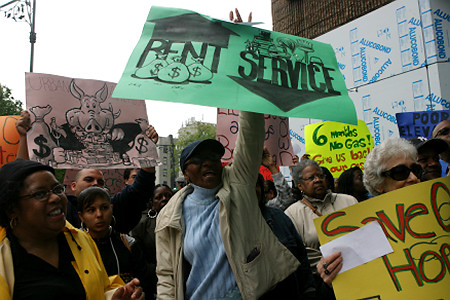
This is the year that squatters evict landlords,
gazing like admirals from the rail
of the roofdeck
or levitating hands in praise
of steam in the shower;
this is the year
that shawled refugees deport judges
who stare at the floor
and their swollen feet
as files are stamped
with their destination;
this is the year that police revolvers,
stove-hot, blister the fingers
of raging cops,
and nightsticks splinter
in their palms;
this is the year that darkskinned men
lynched a century ago
return to sip coffee quietly
with the apologizing descendants
of their executioners.

This is the year that those
who swim the border’s undertow
and shiver in boxcars
are greeted with trumpets and drums
at the first railroad crossing
on the other side;
this is the year that the hands
pulling tomatoes from the vine
uproot the deed to the earth that sprouts
the vine,
the hands canning tomatoes
are named in the will
that owns the bedlam of the cannery;
this is the year that the eyes stinging from the poison that purifies toilets
awaken at last to the sight
of a rooster-loud hillside,
pilgrimage of immigrant birth; this is the year that cockroaches
become extinct, that no doctor
finds a roach embedded
in the ear of an infant;
this is the year that the food stamps
of adolescent mothers
are auctioned like gold doubloons,
and no coin is given to buy machetes
for the next bouquet of severed heads
in coffee plantation country.

If the abolition of slave-manacles
began as a vision of hands without manacles,then this is the year;
if the shutdown of extermination camps
began as imagination of a land
without barbed wire or the crematorum,
then this is the year;
if every rebellion begins with the idea
that conquerors on horseback are not many-legged gods, that they too drown
if plunged in the river,
then this is the year.

So may every humiliated mouth,
teeth like desecrated headstones,
fill with the angels of bread.

Dayenu as Irony? That’s Quite Enough!

Just in time for Passover, here’s British author Howard Jacobson’s fascinating take on Dayenu as the ultimate sarcastic Jewish joke:

Superfluous though we insist each of God’s favors and blessings to us was, the truth is we would have been in serious trouble without any of them. For where would have been the use of His leading us to the Red Sea had He not parted it; or our wandering for 40 years in the wilderness, had He not provided us with Manna? We say the one would have sufficed without the other, but in fact it would not. Thus the song is as much a rehearsal of complaints we might have voiced and might voice yet, as it is a hymn of praise.

Built into this magnificent song of gratitude, therefore, is the fact of our colossal ingratitude. Nothing is enough for us. Not because we are vainglorious or greedy, but because our appetite for intellectual dissatisfaction, like our apprehension of disaster, knows no bounds. Call it the ravenousness of reasoning—the rabbinic “on the one hand this, on the other hand that.” Call it our love of striking bargains. Call it hyperbole. Call it what you like, it is the bedrock of Jewish comedy. As it is the bedrock of our faith.

The Jewish joke is above all a strategy for survival. It looks, of necessity, to the future. It anticipates a woe before that woe is visited upon us. It gets in first with the criticism and the cruelty. If anybody is going to knock us around it won’t be the Cossacks, it will be ourselves. So that while a Jewish joke appears to be the perfecting of self-denigration, it is actually the opposite. It is the fruit of a perpetual vigilance and in the process demonstrates an intelligence that is, because it has to be, unremitting.

If there were such a thing as a perfect Jewish joke—and who is to say that the Dayenu is not it?—it would never finish. Ours is a religion of suspense. We wait and wait, for a God who cannot show Himself and a Messiah we would rather never came. We await an end, as we await a punch line, to a narrative that has no end. And just when we thought it was all over, it begins again. What are the last words of the Dayenu? “It would have sufficed us …” But by now our ear demands another clause, another gift, another setback for God to overcome. There is no final thank-you because there is no final sufficiency.

If this whets your appetite, check out the entire piece in Tablet Magazine.

Fun Facts for Valentine’s Day

Some fun fast facts for Valentine’s Day. Did you know that:

The feast of St. Valentine was established by Pope Gelasius I in 496.  Some say that Valentine’s feast day is celebrated in February because the church wanted to Christianize an ancient Roman pagan festival called Lupercalia, which centered around fertility and purification, and also took place in February.

Valentine’s feast day has been celebrated as a lovers’ holiday and a day of romance since the 14th century, when the date was thought to be the beginning of the mating season for birds.

Many claim the closest Jewish equivalent of Valentine’s Day was Tu B’Av (“the fifteenth of Av”):

Tu B’Av, the 15th Day of Av, is both an ancient and modern holiday. Originally a post-biblical day of joy, it served as a matchmaking day for unmarried women in the second Temple period (before the fall of Jerusalem in 70 C.E.). Tu B’Av was almost unnoticed in the Jewish calendar for many centuries but it has been rejuvenated in recent decades, especially in the modern state of Israel. In its modern incarnation it is gradually becoming a Hebrew-Jewish Day of Love, slightly resembling Valentine’s Day in English-speaking countries.

There is no way to know exactly how early Tu B’Av began. The first mention of this date is in the Mishnah (compiled and edited in the end of the second century), where Rabban Shimon ben Gamliel is quoted saying, “There were no better (i.e. happier) days for the people of Israel than the Fifteenth of Av and Yom Kippur, since on these days the daughters of Israel/Jerusalem go out dressed in white and dance in the vineyards. What were they saying: Young man, consider whom you choose (to be your wife)?”(Ta’anit, Chapter 4).

Happy Lovin’…

A Single Tree is Really a Whole Forest: Zen Wisdom for Tu B’shvat

In honor of Tu B’shvat – the Jewish New Year for the Trees – I offer you these lovely tidbits from “Trees and Spirituality: An Exploration” by Dr. Nalini Nadkarni, who teaches Environmental Studies at Evergreen State College.

Happy Tu B’shvat – and may your roots discover hidden spheres of growth in the coming year!

Enlightenment
Trees link us to enlightenment. Their ubiquitous shape and form, their persistence through time, and their “rootedness” in the soil, remind us of the connection between earth and the heavens.

Buddha sat mediating under a Bodhi tree. When dawn came, the sun brought enlightenment to him.

As if to reinforce this universality, we see tree forms everywhere – in rivers, caves, blood vessels, lungs – and in the form of Zen Buddhism itself. Historically, temples follow lineages, like family trees. Each temple was brought into a hierarchy, with branch temples under main temples and each level responsible for the one beneath.

Breathing
Like other living beings, trees “breathe.” Through photosynthesis, they help supply the most basic of needs of humans – giving us clean air to breathe. This connection to breathing links trees to meditation and reflection.

The Hebrew word for breath – neshama – is the same as the word for soul. Our spiritual life force comes by way of air and respiration.

Silence
In the services I attended this fall, the most powerful moments were the moments of silence – the time between speaking and hymns. Buddhist silence, samantha – stopping, calming, concentrating – is very important. It is the same as the stillness I see when I look up at a tree on a windless summer day. Trees are rooted in the ground and make no sound. They epitomize samantha.

Emptiness
…In Zen practice, you do not strive to delete all thoughts. Rather, you discover the emptiness that is present within the form of thoughts, experiences and realities.

Most researchers who study the forest focus on the trees and animals – the forms. In contrast, Dr. Roman Dial studies the emptiness within the forest. He uses a laser to get distances to branches and leaves, making images of their “negative space.” These are stunning in their beauty and also in their significance. How does a bird negotiate through space? How does a pollen grain move? Or a termite queen, or a particle or pollutant?

Oneness
According to Buddhist thinking, the idea of a separate “self” is an illusion. There is no external individual being apart from interaction with the world. Although we each have a separate set of perceptions and sensations, the idea that there is a fixed “self” is a false inference.

Trees remind us of this because a tree is a modular being. Most animals, including humans, develop and grow as a single entity. In contrast, the seed of a tree germinates into a root and a shoot, which in turn differentiates into branches, with buds that become the next generation of leaves, flowers, and fruits, and so on. Along the way, genetic material can undergo mutations and changes.

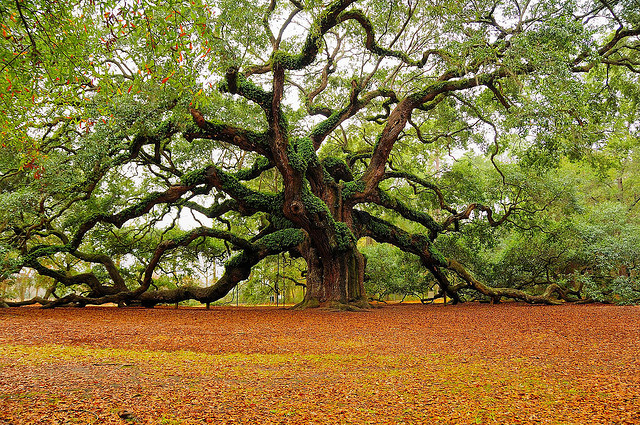
Thus a mature tree contains thousand of separate branch systems, each a separate “lineage,” a separate genetic entity. Fruit growers know that certain branches produce much better fruit. They can graft the best branch and start another tree that will produce to that type. So a single tree is really a whole forest. There are many in one.

Time
Trees help humans tell time; they spell the seasons. Nothing tells us about the passing of time more clearly than autumn colors or the tender green of emerging buds.

Forests teach us about the dynamism of nature – the need to accept change even if it seems to be destructive. When I go out to my forest plots and see a fallen tree – a tree I have climbed a hundred times, taken data from, named – I have to remind myself that this is the nature of the forest. Seedlings will grow in the light created by the fallen giant.

Hidden Worlds
Trees manifest hidden spheres. Their roots are underground and out of sight yet provide support for the tree and serve as the gathering apparatus for water and nutrients. The belowground world sustains the aboveground parts. Tree roots can symbolize that which we hide from ourselves and others – our troubles, failings, ill-health. To be truthful – full of troth – like a tree, we must recognize that these hidden parts are an important part of us, not something to discount, just as soil-covered roots of a tree are essential to its being.

(From Northwest Dharma News, October/November 2002, pp. 10, 13)

Purim Came Early This Year

Oh wow…

Anthea Butler, writing in Religion Dispataches:

While most Christians were having regular Sunday services, over at Eddie Long’s New Birth Church in Lithonia, Ga, Ralph Messer, who is part of the Hebrew Roots movement, was crowning Eddie Long King in an elaborate ceremony that included wrapping Long in a Torah Scroll purported to be found at Auschwitz and Birkenau.

In case you’re unable or unwilling to watch: the video shows Messer giving Long the Torah scroll declaring that he is the first man to look upon the scroll after 3000 years. Long is “wrapped in the scroll” and prayed over. Messer asks Long to take a seat, and declares that God gave Long a position of power and authority. He is given the constitution of God as a king (6:49), the Torah, and then, Messer has four men representing the four corners of the earth, (7:04) pick the chair up. Messer then declares that Eddie Long is raised up from a commoner to a King, replete with music, cheers, and a poorly executed blessing in Hebrew. If it weren’t so offensive to Christian and Jewish sensibilities (and so utterly in error in terms of tradition, as Wil Gafney points out at HuffPo)  it would be laughable.

Last word goes to Peter Manseau, also from Religion Dispatches:

When Messer broke into Hebrew song as Long was paraded aloft in a chair, carrying the Torah and draped with a prayer shawl, it was like watching a summer stock revival of Yentl performed by a cast that had never met any actual Jews.

I have no more to add…

Passover Observance Then and Now


and when your children ask you what
do you mean by this rite tell them
in the beginning we offered late night sacrifices
and supplications while our god meted out
punishments against the gods of egypt later
we hid behind behind doorjambs swelled with
dread murmuring pour out your wrath on
those who seek our blood and destroy the nations who know
not your name but now we observe by bursting the
gates of fear wide open proclaiming let all who’ve been
broken gather each another’s scattered
shattered pieces let all who seek liberation
come to the table let all who are hungry
come and eat

(Exodus 12:12, 26-27)

New Musical Greetings for Hanukkah!

Happy first day of Hanukkah! If you’re looking for ways to light up this dark season, here are two gorgeous musical Hanukkah greetings courtesy of Pharoah’s Daughter. Check out these great versions of  Hanukkah classics “Maoz Tzur” (above) and “Al Hansim” (below). Both were filmed at the 2008 Rabbis for Human Rights – North America Conference in Washington DC.

(Anyone else growing weary of the utterly overused yet still somehow requisite German-folk setting we Ashkenazim use for Maoz Tzur? I’m going with this one when I light the candles tonight…)

A Poem for Sukkot: The Season Turns

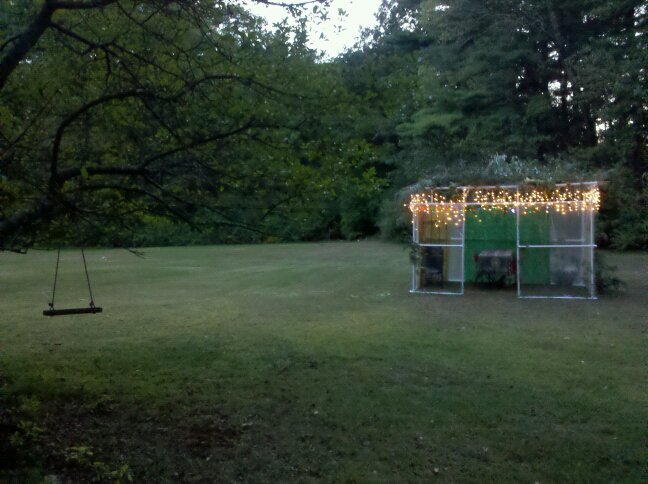
It’s the festival of Sukkot – the holiday in which we (among many other things) liturgically chant from the book of Ecclesiastes.

Here, below, is my new version of the most famous part: Chapter 3, verses 1 through 8.

Kohelet 3:1-8

an eon turns to a millisecond
swing from here and to
there keeping rhythm here
to there and back again we are
born and we
die we plant and
we uproot
we kill we heal we
destroy and we rebuild again
we cry out and we laugh to the high
high heavens we throw stones and
gather them up once
more we embrace and we turn
away cast our eyes down
down to the ground we seek and
we lose we may yet find we
hoard and we purge we tear
and then sew back up we hold our tongues
and we scream like rain
we’re spitting in the wind
such a fine fine line between
love and hate and war
and peace enjoy it
while you can