nadav and avihu post mortem

his son’s bodies still smoldering next to the altar
they came and said to aaron
this is what happens when you play with strange fire
this is what happens when you’re too cautious
this is what happens when you don’t read the instructions
this is what happens when you’re too scared to improvise
this is what happens when you look into the light
this is what happens when you walk on the dark side
this is what happens when you attempt to escape
this is what happens when you remain in the ghetto
this is what happens when you believe the kindness of strangers
this is what happens when you fear the other
this is what happens when you resist
this is what happens when you go like sheep
to the slaughter

(Leviticus 10:1-3)

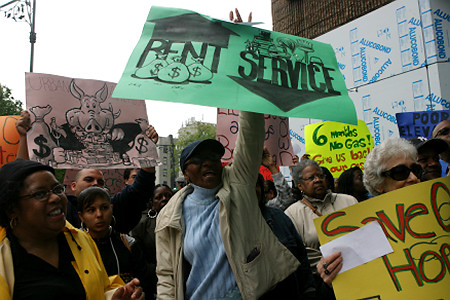
For Passover: This is the Year that Squatters Evict Landlords

A poem for Pesach: “Imagine the Angels of Bread” by Martin Espada.  Read it at seder this year!

This is the year that squatters evict landlords,
gazing like admirals from the rail
of the roofdeck
or levitating hands in praise
of steam in the shower;
this is the year
that shawled refugees deport judges
who stare at the floor
and their swollen feet
as files are stamped
with their destination;
this is the year that police revolvers,
stove-hot, blister the fingers
of raging cops,
and nightsticks splinter
in their palms;
this is the year that darkskinned men
lynched a century ago
return to sip coffee quietly
with the apologizing descendants
of their executioners.

This is the year that those
who swim the border’s undertow
and shiver in boxcars
are greeted with trumpets and drums
at the first railroad crossing
on the other side;
this is the year that the hands
pulling tomatoes from the vine
uproot the deed to the earth that sprouts
the vine,
the hands canning tomatoes
are named in the will
that owns the bedlam of the cannery;
this is the year that the eyes stinging from the poison that purifies toilets
awaken at last to the sight
of a rooster-loud hillside,
pilgrimage of immigrant birth; this is the year that cockroaches
become extinct, that no doctor
finds a roach embedded
in the ear of an infant;
this is the year that the food stamps
of adolescent mothers
are auctioned like gold doubloons,
and no coin is given to buy machetes
for the next bouquet of severed heads
in coffee plantation country.

If the abolition of slave-manacles
began as a vision of hands without manacles,then this is the year;
if the shutdown of extermination camps
began as imagination of a land
without barbed wire or the crematorum,
then this is the year;
if every rebellion begins with the idea
that conquerors on horseback are not many-legged gods, that they too drown
if plunged in the river,
then this is the year.

So may every humiliated mouth,
teeth like desecrated headstones,
fill with the angels of bread.

Dayenu as Irony? That’s Quite Enough!

Just in time for Passover, here’s British author Howard Jacobson’s fascinating take on Dayenu as the ultimate sarcastic Jewish joke:

Superfluous though we insist each of God’s favors and blessings to us was, the truth is we would have been in serious trouble without any of them. For where would have been the use of His leading us to the Red Sea had He not parted it; or our wandering for 40 years in the wilderness, had He not provided us with Manna? We say the one would have sufficed without the other, but in fact it would not. Thus the song is as much a rehearsal of complaints we might have voiced and might voice yet, as it is a hymn of praise.

Built into this magnificent song of gratitude, therefore, is the fact of our colossal ingratitude. Nothing is enough for us. Not because we are vainglorious or greedy, but because our appetite for intellectual dissatisfaction, like our apprehension of disaster, knows no bounds. Call it the ravenousness of reasoning—the rabbinic “on the one hand this, on the other hand that.” Call it our love of striking bargains. Call it hyperbole. Call it what you like, it is the bedrock of Jewish comedy. As it is the bedrock of our faith.

The Jewish joke is above all a strategy for survival. It looks, of necessity, to the future. It anticipates a woe before that woe is visited upon us. It gets in first with the criticism and the cruelty. If anybody is going to knock us around it won’t be the Cossacks, it will be ourselves. So that while a Jewish joke appears to be the perfecting of self-denigration, it is actually the opposite. It is the fruit of a perpetual vigilance and in the process demonstrates an intelligence that is, because it has to be, unremitting.

If there were such a thing as a perfect Jewish joke—and who is to say that the Dayenu is not it?—it would never finish. Ours is a religion of suspense. We wait and wait, for a God who cannot show Himself and a Messiah we would rather never came. We await an end, as we await a punch line, to a narrative that has no end. And just when we thought it was all over, it begins again. What are the last words of the Dayenu? “It would have sufficed us …” But by now our ear demands another clause, another gift, another setback for God to overcome. There is no final thank-you because there is no final sufficiency.

If this whets your appetite, check out the entire piece in Tablet Magazine.

instruction manual for the high priest


in order for the offering to ascend
properly it must stay on the altar all
night make sure the fire is kept
burning until morning when the offering
has been reduced to ash when the
remaining cinders have danced out of the
fire flying up like slaves set free at
last take the dying embers and go outside
far outside the camp to a place you have never
been before and dump them in a heap still
smoking still burning with desire
when you return wash yourself thoroughly then
place more wood on the altar you
must not let the fire go out do
not let the fire
go out

(Leviticus 6:1-6)

pillar of smoke, pillar of fire

say goodbye to the mountain
goodbye to the warm and
trembling earth gather it all up the
tent poles the utensils the
hangings the posts the pots the pans the
tent pegs tomorrow we leave for the
wilderness don’t plan don’t think don’t
hesitate just dive deep and burn up your deepest
most unblemished yearning the pillars of
smoke and fire billowing forth from the altar will
guide you throughout all
your journeys

(Exodus 39:39-40, 40:36-38)

an offering to the most high

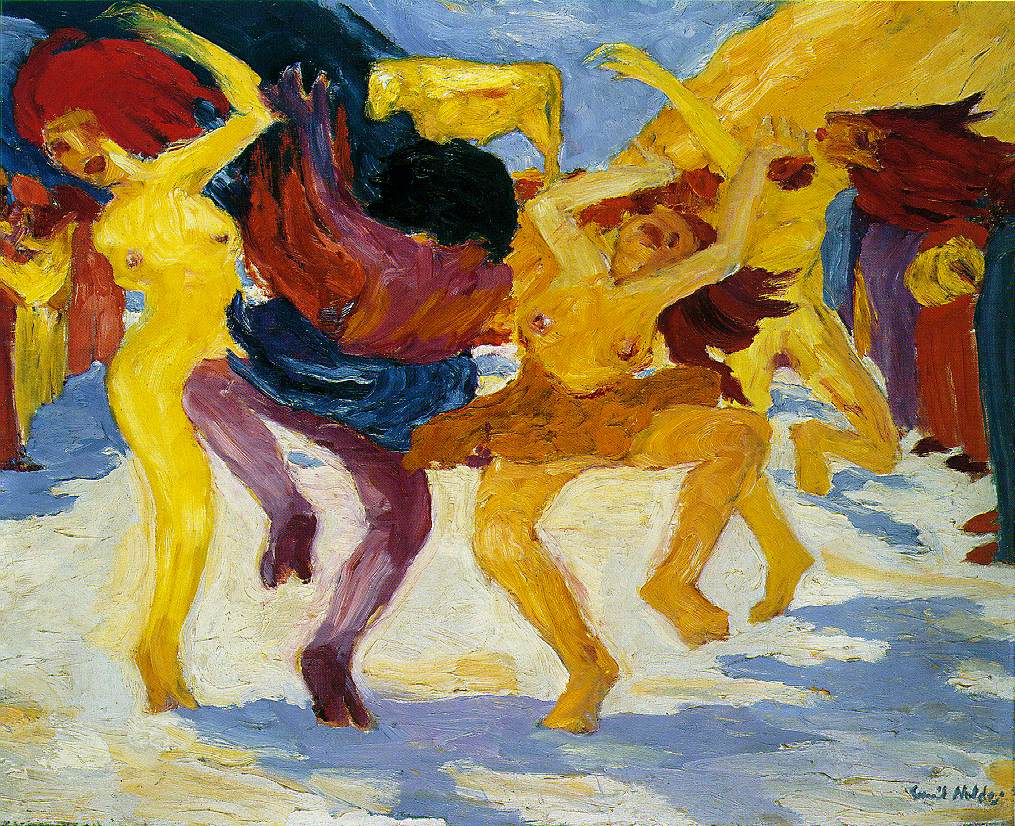
Emil Nolde, “Dance Around the Golden Calf”

while the two men sat on the mountaintop
chiseling commandments in stone
the people poured out their fears
gleaming like pure gold from the altar
of their surrendered desires
they cried tomorrow shall be a festival
to the most high
then offering up their wildest hopes
their desperate dreams dancing they
shouted out hallels until at last
they came into the heart of their liberation
and faced the blinding truth of their commitment
when moses came down and saw
the people wheeling and whirling round
like sacred scrolls unfurling
he shattered the dusty tablets
at the foot of the mountain
and joined in the dance.

(Exodus 32:1-5)

a kingdom of priests


now if you walk in my ways if you
honor in the divine image planted deep
within you will see you are all treasured all
holy yes you are a kingdom of priests look
inside see how you are adorned in
sacral vestments of gold and blue and purple
and crimson look deep inside see how your hearts shine
forth like precious stones close your eyes see how your
minds eye gleams like pure gold look
deeper still there you will encounter the holiest
of holies there i will meet with you there
i will speak with you

(Exodus 28:4-5, 17, 36)

this is how i will dwell among them

Photo: Don Gale (from blog "Tips and Techniques: Landscape and Outdoor Photography")

god said to moses you shall accept
gifts from anyone whose heart is moved let
them bring their ragged scraps of cloth their
jagged flinty stones let them bring their
charred and splintered kindling the thick sands
of sinai gathered in the hems of their garments so
that when they leave my mountain when they go
stumbling back into the wilderness even as they
wander to the broken ends of the earth they
will know i dwell
among them

(Exodus 25:1-8)

Jewish Law/Muslim Law = Laws for Life, Not “Hegemonic Political Force”

Highly recommended (and extremely important): this recent Moment Magazine article by legal scholar Marshall Breger, “Why Jews Can’t Criticize Sharia Law.”

An excerpt:

While clearly some Muslims do view sharia as a hegemonic political force, the vast majority of Muslims, especially those living in the West, view sharia no differently from the way Jews view the halachic system: as an overarching guide to ordering one’s life. Muslim jurists have always drawn on sharia to mandate that fellow Muslims obey the laws of the land in matters that sharia does not prohibit. In numerous instances (see Koran 5:11), Muslims are told to “honor their contracts” and so to honor the “social contract” represented by the law of the land. The Fiqh Council of North America, the leading interpreter of Islamic law in the United States, ruled as recently as September 2011 that “there is no inherent conflict between the normative values of Islam and the U.S. Constitution and the Bill of Rights.”

i slightly rearrange the laws of exodus

when my angel goes before you and brings you to the
amorites the hittites the canaanites the hivites the
jebusites i will not drive them out before you lest
the land become desolate do not annihilate them
nor tear them down nor smash their pillars for
if you mistreat them i will heed their outcry as
soon as they cry out to me and my anger
shall blaze forth
against you

works for me

(Exodus 22:20-23, 23:23-24)