A Meditation for Elul: Yes, God Loves You

As I mentioned in a previous post, during the month of Elul, I’ll be offering occasional “Elul Meditations” that I hope will help with your spiritual preparation for the Days of Awe. This one is an excerpt from a Rosh Hashanah sermon I gave ten years ago entitled “The Season of Our Loving.”

If we don’t relate to a personal, supernatural God on High, what could it possibly mean to pray prayers that say “God loves us?”  Maybe – just maybe – it means that our love for one another is but a hint of something much greater: an infinite place of unconditional love that pervades the universe. Perhaps the simplest way we experience God’s love is when we look into the eyes of our own loved ones. I am reminded of Jacob’s unbearably touching words, the words that come when he finally reconciles with his beloved brother Esau: “to see your face is to see the face of God.” Could it be possible that when we love another, we are tapping into a well that connects us with a transcendent love greater than anything we can possibly imagine?

Ahavat Olam – “with an unending love you love us, Adonai, our God.” I understand this prayer as much more than simply a tribal statement of faith about God’s exclusive gift of Torah to the people Israel. At its most profound level, this prayer expresses our sense that there is a source of unconditional love that surrounds all peoples always – an “Ahavat Olam.” It is reflected in our love for one another, but it is not ultimately dependant upon it. For if love is only a transient feeling or sensation, then it is not truly eternal. Perhaps when we say “God loves us,” we are simply saying that this life force – this love force – is an elemental part of our lives and our world. Like the love we share with true loved ones, it has a transformative power. It connects us in a profound way. It protects and validates us. It helps us to overcome our solitariness. It keeps us safe.

Is The Bible Destroying Creation?

From this week’s Torah portion, Parashat Shoftim:

When in your war against a city you have to besiege it a long time in order to capture it, you must not destroy (“bal tashchit”) its trees, wielding the ax against them. You may eat of them, but you must not cut them down. Are trees of the field human to withdraw before you in the city? Only trees that you know do not yield food may be destroyed.” (Deuteronomy 20:19-20)

It’s a tribute to the subversive creativity of Talmudic tradition that the Rabbis could take a text such as this – coming from a litany of Biblical laws concerning warfare – and transform it into Jewish tradition’s foundational environmental commandment.

Indeed, the sages of the Talmud would eventually apply the term bal tashchit (“do not destroy”) to apply to issues far transcending concern over fruit-bearing trees during wartime.  The concept “bal tashchit” eventually became a Jewish legal term referring to the destruction of natural resources on a wide scale, ranging from the wanton killing of animals (Talmud Hullin 7b) to the wasting of fuel (Talmud Shabbat 67b).

Since the Jewish imperative to care for the environment is Biblically based, it might come as a surprise to learn that many in the environmental movement blame Biblical tradition for promoting the exploitation of the earth’s natural resources.  I still remember well when Time Magazine promoted environmental concerns by choosing Earth as “Planet of the Year”  in 1989.  In its cover story, Time made the following pointed observation:

Humanity’s current predatory relationship with nature reflects a man-centered world view that has evolved over the ages. Almost every society has had its myths about the earth and its origins. The ancient Chinese depicted Chaos as an enormous egg whose parts separated into earth and sky, yin and yang. The Greeks believed Gaia, the earth, was created immediately after Chaos and gave birth to the gods. In many pagan societies, the earth was seen as a mother, a fertile giver of life. Nature — the soil, forest, sea — was endowed with divinity, and mortals were subordinate to it.

The Judeo-Christian tradition introduced a radically different concept. The earth was the creation of a monotheistic God, who, after shaping it, ordered its inhabitants, in the words of Genesis: “Be fruitful and multiply, and replenish the earth and subdue it: and have dominion over the fish of the sea and over the fowl of the air and over every living thing that moveth upon the earth.” The idea of dominion could be interpreted as an invitation to use nature as a convenience.

Ouch.

In fairness, it should be said that the key word phrase in the above is “could be interpreted as.” We might say it is not Biblical tradition per se, but rather a corrupt misinterpretation of the Bible (specifically the oft-quoted Genesis 1:28) we might blame for introducing this “radical new concept.”

If Genesis 1 teaches us anything at all, it is that creation is the sacred product of a divine process. In this context, God does not simply hand the earth over to humanity so that we may run roughshod over creation as we see fit.  In this regard, the Torah’s use of the term “dominion” (“kivshuha“) clearly denotes mastery as responsibility, not exploitation.

This point is powerfully driven home by the interpretation of Rabbi Samson Raphael Hirsch, who commented on the Deuteronomy verse above by saying that humanity’s careless waste of God’s creation is nothing short of idolatry:

Yea, “Do not destroy anything” is the first and most general call of God… If you should now raise your hand to play a childish game, to indulge in senseless rage, wishing to destroy that which you should only use, wishing to exterminate that which you should only master, if you should regard the beings beneath you as objects without rights, not perceiving God Who created them, and therefore desire that they feel the might of your presumptuous mood, instead of using them only as the means of wise human activity – then God’s call proclaims to you, “Do not destroy anything!

Only if you use the things around you for wise human purposes, sanctified by the word of My teaching, only then do you have the right over them which I have given you as a human. However, if you destroy, if you ruin, at that moment you are not a human but an animal and have no right to the things around you. I lent them to you for wise use only; never forget that I lent them to you. As soon as you use them unwisely, be it the greatest or the smallest, you commit treachery against My world, you commit murder and robbery against My property, you sin against Me!”  This is what God calls unto you, and with this call does God represent the greatest and the smallest against you and grants the smallest as also the greatest a right against your presumptuousness…

…In truth, there is no one nearer to idolatry than one who can disregard the fact that creation and its creatures are the property of God, who presumes also to have the right, having the might, to destroy them according to a presumptuous act of will. Yes, that one is already serving the most powerful idols – anger, pride, and above all, ego, which in its passion regards itself as the master of things. (Rabbi Samson Raphael Hirsch, Horeb, 56:397-398)

As Rabbi Hirsh would have it, it is not Western religious tradition, but rather the idolatrous twisting of this tradition that has led humanity to its “current predatory relationship with nature.” If we do indeed “use nature as a convenience,” it is not the Torah, but rather own “anger, pride, and ego” upon which we must ultimately lay blame.


“As Long as There are Slaughterhouses, There Will be Battlefields”

When the Lord enlarges your territory, as (God) has promised you, and say. “I shall eat some meat.” for you have the urge to eat meat, you may eat meat whenever you wish. (Deuteronomy 12:20)

Though the Jewish dietary laws of kashrut allow for meat-eating, Jewish tradition is generally ambivalent about humanity’s carnivorous inclinations. To wit, the verse above from this week’s Torah portion Parashat Re’eh: note that it does not command but rather permits the consumption of meat.

According to Jewish law, the meat referred to in the verse above is known as b’sar ta’avah, “meat of lust.”  By all indications, the Rabbis did not consider meat-eating to be a necessity for life; it was, rather an accommodation to our “lesser angels.”  Orthodox rabbi and Torah scholar, Rabbi J. David Bleich puts it well: “Jewish tradition does not command carnivorous behavior.” Likewise, noted Torah commentator Nehama Leibowitz comments on the above Torah verse by pointing out that the Torah grants permission to eat meat rather grudgingly. She concludes that while humanity has been granted dominion over the animal world, we may not treat them with wanton disregard – and that God allows a “barely tolerated dispensation” to slaughter animals for our consumption. (“Studies on Bereshit,” p. 77)

It’s particularly noteworthy that Adam and Eve, the world’s first humans who lived in an idealized Edenic world, were in fact vegetarians. (Genesis 1:29) It was not until after the Great Flood that God told Noah and his descendents that they would be allowed to eat meat:

Every creature that lives shall be yours to eat; as with the green grasses, I give you all these.  (Genesis 9:3)

Even here, however, God makes it clear that animals cannot be eaten along with their blood (a commandment that is repeated in this week’s portion.) Later in the Torah, more explicit dietary rules will be commanded through Moses.

It might be said that one of the lessons God learns from the Noah story is that humankind has, if you pardon the expression, a taste for blood. Some posit that this new permission to eat meat was a kind of divine compromise – allowing humanity to satiate its bestial, carnivorous desire, while at the same time restricting our blood lust so that it will never again run amok à la the generation of Noah.

At the end of the day, however, it’s worth asking: can we even conceive of such a thing as “restricted blood lust?” If Torah considers vegetarianism the ideal, could it be that b’sar ta’avah really just little more than an oxymoron at the end of the day?

Noted vegetarian Leo Tolstoy famously stated,

As long as there are slaughterhouses there will be battlefields. A vegetarian diet is the acid test of humanitarianism.

A more contemporary writer, Jonathan Safran Foer, has become an eloquent advocate for the socio-ethical imperatives of vegetarianism. Click above and below to hear him discuss these ideas as explored in his latest book, “Eating Animals.”

Deuteronomist Theology: A Katrina Test Case

In almost every portion of Deuteronomy we read an impassioned expression of a unique theology. Boiled down to its barest essence, it can summed up as follows: “You’re about to enter the Land. Just follow my laws and you’ll be fine. But break them (particularly the ones about serving other gods) and you’ll be very, very, very sorry.”

This week’s portion, Parashat Eikev, is no exception:

If, then, you obey the commandments that I enjoin upon you this day, loving the Eternal you God and serving God with all your heart and soul, I will grant the rain for your land in season, the early rain and the late. You shall gather in your grain and wine and oil – I will also provide grass in the fields for your cattle – and thus you shall eat your fill. Take care not to be lured away to serve other gods and bow to them. For the Eternal’s anger will flare up against you, shutting up the skies so that there will be no rain and the ground will not yield its produce; and you will soon perish from the good land that the Eternal is assigning to you. (Deuteronomy 11:13-17)

I know that many regard the theology of Deuteronomy, with its image of a threatening God and its simplistic “play by my rules and no one gets hurt” message to be painfully primitive –  even morally problematic. To a certain extent I would certainly agree. However I would also add that Deuternomomistic Theology can not so easily be dismissed.

Let’s use a very recent incident: namely, Hurricane Katrina – as an example.

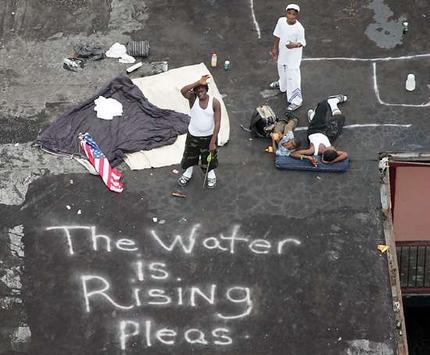
Following this tragic disaster, it wasn’t long before religious fundamentalists piously proclaimed Katrina to be “God’s judgement” upon the “moral sins” of New Orleans (or in some cases, America at large).  This literalist interpretation of the Bible; this victim-blaming for moralistic/political purposes represents the theology at its very worst – and I have no trouble saying so.

However, while this theological approach might fall short as a way to explain random natural disasters, it does serve an important purpose in a different regard: it provides an important reminder of collective responsibility.

After all, beyond all the nasty divine threats in Deuteronomy, there is a more profound underlying message: in society, our choices matter. Regardless of what we believe about God, we cannot ignore the message that our collective actions have very real consequences for ourselves and our world.

So, for example, while many of us refuse to accept that Katrina was a punishment for homosexuality, et al, we cannot deny that much of this tragedy was indeed a result of human failure: for example, the failure of our government to heed reports recommending the repair of decrepit levees, the failure of local, state and national agencies to respond to the disaster promptly and properly, the failure of agencies to keep their promises to aid in rebuilding efforts, etc.

At the end of the day, Deuteronomy’s theology is rooted in the concept of covenant – and more specifically, covenental responsibility. Even if we don’t agree with the literal terms of this covenant as understood by its ancient Near Eastern author, we can still uphold the its essential ideal:

Unless we take our collective responsibility to one another and our world seriously, we may well “perish from the good land” upon which we live.

The Shema: A Parsing

Listen Israel, “YHVH is our God, YHVH is One!” (Deuternomy, 6:4)

Listen Israel:  The most central prayer in Jewish tradition is not a prayer at all. Prayers by definition are directed to God. These words are directed collectively inward. They indicate that we are about to read a statement of faith, of purpose, a sacred mission statement, if you will.

YHVH is our God: “YHVH” is God’s ineffable name, the unpronounceable, unknowable proper name of the God that in ancient times, the Israelite nation claimed as its own.

Indeed, in the theological marketplace of the ancient Near East, every nation had its own national god.  In its original context, then: “Listen, Israel, there may be many gods from which to choose, out there, but YHVH is our god.”

ADONAI is One!: Some choose to translate the word“echad” (“one”) as “alone.” This suggests an imperative: the Israelites must worship YHVH as God and no other.

Others understand this phrase as a statement of theological chutzpah. According to this reading, “YHVH is One”  means that there actually is none else: “You know those other deities the nations call “gods?” Well they’re not actually gods at all. At the end of the day, Israel’s god is the only God there is.”

Religious exceptionalism? Some might choose read these words that way. But on a much deeper level, the words “YHVH is One” express a profoundly universal world view. Our sacred mission statement is a reminder that while we live in a universe of diversity and multiplicity, this variety is ultimately part of a much larger sublime Unity that moves through us all.

Parsed thus:

Listen! Amidst the raucous, cacophony that resounds throughout our world, we may yet discern one Voice ever calling to us.  This voice goes by many names; we call it YHVH. Let us attune ourselves to it with all our heart, all our soul, and all our might.,.

A Poem for Tisha B’Av

At our Tisha B’Av service last night, we read several contemporary poems alongside the traditional chanting of Lamentations.  Here is one:

Try To Praise The Mutilated World

Try to praise the mutilated world.
Remember June’s long days,
and wild strawberries, drops of wine, the dew.
The nettles that methodically overgrow
the abandoned homesteads of exiles.
You must praise the mutilated world.
You watched the stylish yachts and ships;
one of them had a long trip ahead of it,
while salty oblivion awaited others.
You’ve seen the refugees heading nowhere,
you’ve heard the executioners sing joyfully.
You should praise the mutilated world.
Remember the moments when we were together
in a white room and the curtain fluttered.
Return in thought to the concert where music flared.
You gathered acorns in the park in autumn
and leaves eddied over the earth’s scars.
Praise the mutilated world
and the grey feather a thrush lost,
and the gentle light that strays and vanishes
and returns.

– Adam Zagajewski (translation: Renata Gorczynski )

The Path to Healing is Justice

Your country is desolate; your cities are burned with fire; your land, strangers devour it in your presence, and it is desolate, as overthrown by floods.      (Isaiah 1:6)

These opening verses from Isaiah, are part of the Haftarah portion for this Shabbat.  It is the final of the so-called “Haftarot of Affliction” that precede Tisha B’Av – the most grief-stricken of Jewish festivals.

Like the Biblical book of Lamentations, our Haftarah is filled to overflowing with fierce divine judgement and and overwhelming sense of communal self-pity and shame:

Ah sinful nation! People laden with iniquity! Brood of evildoers! Depraved children! They have forsaken the Lord, Spurned the Holy One of Israel, Turned their backs (on God). (1:4)

Beginning next week, however, our Haftarah portions will offer messages not of affliction, but of healing and consolation. From this point on, these portions will guide us all the way into the High Holiday season itself. In a sense, the Jewish calendar is currently in a spiritual rhythm that moves us on a journey from pain to healing.

I particularly struck that unlike the book of Lamentations, which is essentially a litany of pain and shame, this week’s Haftarah actually offers a quintessentially prophetic call to justice:

Wash yourselves clean; put away your evil from before My eyes; cease to do wrong.

Learn to do good, seek justice; relieve the oppressed. Uphold the orphan’s rights; take up the widow’s cause.   (Isaiah 1:16-17)

In other words, our present woes can be directly traced to our own acts of injustice. As I read these verses, I’m reminded of the oft-made observation that the strength of a society can only be judged by the extent to which it protects its weakest citizens.  In much the same way, this week’s Haftarah teaches that our own vulnerability is irrevocably bound up with the most vulnerable members of our community.

As it turns out, the Haftarah for Yom Kippur comes from the book of Isaiah as well. I like to think of these two prophetic portions as “spiritual bookends” to this season. At the end of the Days of Awe, we will end with the same essential message with which we began – the way to healing and redemption is really quite simple:

No, this is the fast that I desire: to unlock fetters of wickedness and untie the cords of lawlessness; to let the oppressed go free and break off every yoke. It is to share your bread with the hungry, and to take the wretched poor into your home; to clothe when you see the naked, and never forget your own flesh (Isaiah 58:6-7).

Tweet the Koran for Ramadan

From a recent USA Today article:

In 2009, Hussein Rashid, a professor of Islamic Studies at Virginia Theological Seminary, noticed rabbis using Twitter to highlight snippets of Torah text to celebrate Shavuot, when Jews say Moses received God’s word at Mount Sinai.

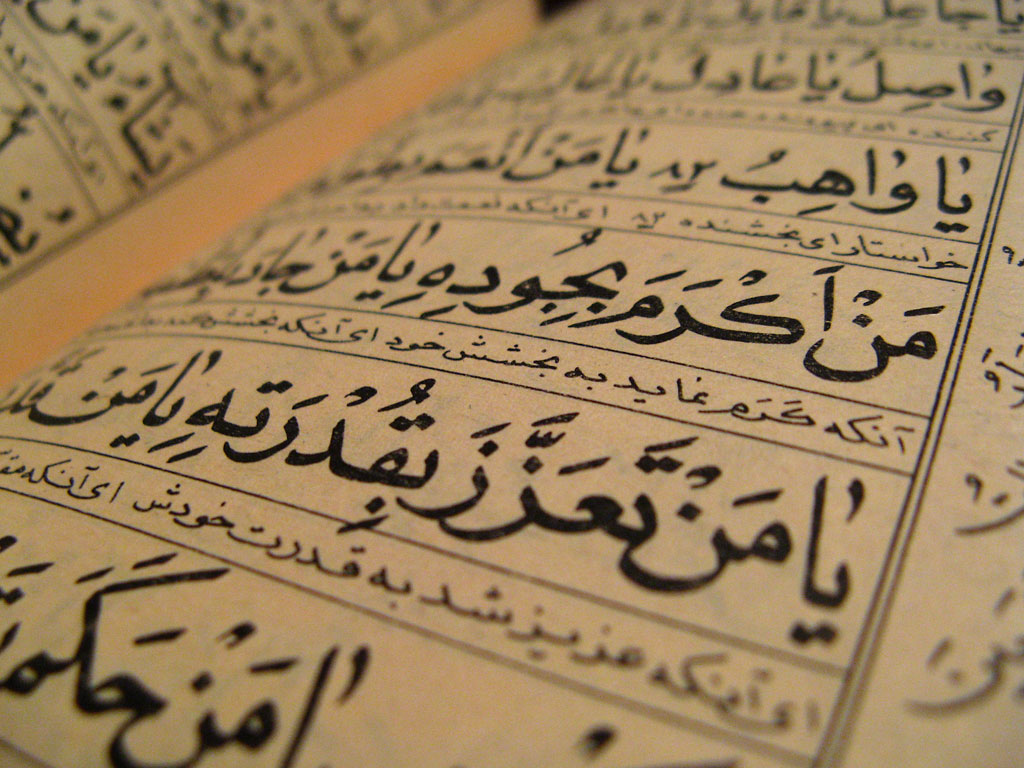
“I saw they were creating a virtual way to pray and study together, and I thought it would be fun to invite a few friends to tweet the Quran for Ramadan. By the next year we had hundreds posting at #Quran and it will be even bigger this year,” he says.

The Quran is the 22-year record of what Muslims believe is Allah’s revelations to the Prophet Mohammed. The goal of using Twitter is to engage Muslims and non-Muslims alike in exploring and discussing the text, Rashid says.

“What verses speak to you when you read the Quran this day? That’s what we’re looking for. The way we engage with scripture is always changing as our lives change. We can ask each other questions. We can explore parallels with other religions,” he adds.

You bet I’ll be joining in on the conversation. Ramadan Kareem to the Muslim community!

The Forty Two Journeys: Are We There Yet?

Parashat Mase’ei, the final portion of the book of Numbers, begins with a detailed itinerary that reviews the forty two individual journeys made by the Israelites’ as they traveled from Ramses/Egypt to their final encampment in Moab, at the Jordan River.

The Ba’al Shem Tov famously interpreted this portion thus:

Whatever happened to the people as a whole will happen to each individual. All the forty-two journeys of the children of Israel will occur to each person between the time he is born and the time he dies.

According to this teaching, the waters of the Sea of Reeds symbolize birth and the waters of the River Jordan represent death – that is to say, the promise or hope that lies beyond. In between, each of us experience forty two phases during the journey of our lives that gradually move us from the “constraints” of the material world to (ideally) a deeper sense of spiritual enlightenment or “liberation.”

Why specifically forty two? While math was never my strong subject – and I’m not typically tempted by gematria – this number does appear to be laden with symbolic significance in Jewish tradition.

Of course, any number divisible by seven (the days of creation) is automatically noteworthy.  Jewish mystical tradition holds that forty two was actually the number with which God created the world itself.  According to the Talmud, God’s full, ineffable name has forty two letters (Kiddushin 71a).  (And if you’re a fan of Douglas Adam’s “The Hitchhiker’s Guide to the Galaxy, you’ll surely know that forty two is the Answer to the Ultimate Question of Life, The Universe, and Everything, as determined by the super computer, Deep Thought…)

If you are intrigued by the notion of the forty two stages of life, you might want to check out this interesting take by Rabbi Simon Jacobson (Chabad), who uses each stop mentioned in this week’s portion to chart out a series of forty two “psycho-spiritual” journeys that lead us from birth to death.  But whether or not you you choose to ascribe deeper significance to the number forty two, I believe  it is extraordinarily powerful to understand our own lives as a series of – often arduous and challenging – passages that invariably lead us to that final place of “crossing over.”

How will you choose to chart your “spiritual itinerary?”

Don’t Expect Applause


From Pirke Avot 1:3 (translation by Rabbi Rami Shapiro):

Antigonus of Sokho received the Teaching from Shimon the Righteous. He used to say:

Live without hesitation.
Dwell not on outcome or reward.
Act with full attention.

The 59th and final “slogan” of Atisha – a revered Buddhist teacher from present-day Bangladesh (980-1052 CE):

Don’t expect applause.

Commentary by Acharya Judy Lief, writing in Tricycle Magazine:

Another problem with the hunt for approval is that it to gain approval you must buy in to the dominant values of the society around you. If what gets approval is getting rich, that is what you strive for; if it is beauty, that is what you obsess about; if it is power over others, that is what you focus on. The desperation for outer rewards goes hand-in-hand with an increasing sense of inner poverty. If you are successful in your quest for recognition, you may be able to ignore what you have given up to achieve it. If you are unsuccessful, you may simply blame the system. But in either case, since you have given over our power to others, you are left empty.

Today’s practice
When you notice you are expecting applause, explore what lies behind that expectation. Notice the subtle shift between when you have done something and when you begin to look around you for recognition.