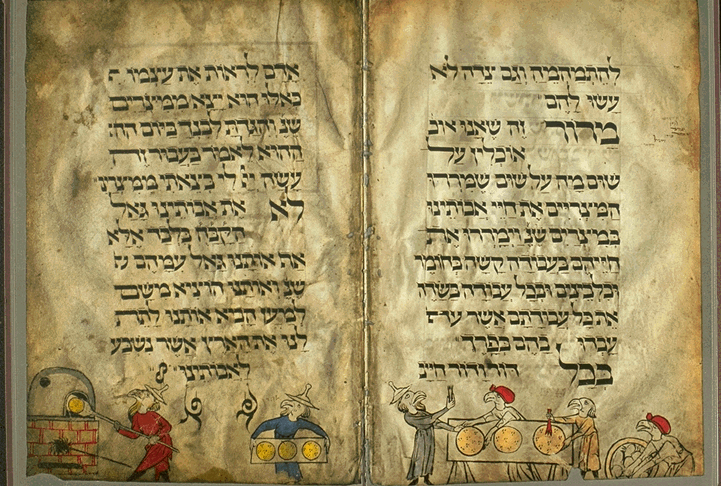
In the Beginning, In God’s Image

Rabbi Akiva says: “‘Love your fellow as yourself'” (Leviticus 19:18), is the greatest principle of the Torah.

Ben Azzai says, “‘When God created man, He made him in the image of God’ (Genesis 5:1) is the greatest principle in the Torah. You should not say: Because I have been dishonored, let my fellow be dishonored along with me…”

Rabbi Tanhuma explained: “If you do so, know whom you are dishonoring – ‘He made him in the image of God.'”

Midrash Genesis Rabbah 24

In this classic Midrash, Rabbis Akiba and Ben Azzai are doing what Talmudic rabbis do best: playing a lively game of spiritual oneupsmanship. The question at hand: what is the central value of Torah?  According to Akiba it is the famous verse from Leviticus, “Love your neighbor as yourself.” Ben Azzai counters with the insight from this week’s Torah portion: humanity was created in God’s image.

Rabbi Tanhuma’s final statement reinforces the weakness of Akiba’s claim: though it is certainly praiseworthy to love your fellow as yourself, this might imply that you only need to treat your fellow as well (or as badly) as you yourself are treated. Ben Azzai points out that if we truly understand that all people are made in the image of God, we must accept that any time we shame, insult or abuse another, we do the same to God.

In a sense, Ben Azzai raises the moral stakes of the equation. As the saying (often misattributed to Dostoevsky) goes: “where there is no God, all is permitted.” This drives home the radical imperative made clear in the very first chapter of Genesis: if all people are made in the divine image, all people are of infinite worth; all people are deserving of dignity, respect and fair treatment.

The Torah thus begins with this foundational principle, which has both interpersonal/ethical as well as global/moral implications. As we start Torah anew yet again, we return to its central question: how can we find the wherewithal to treat everyone we meet as a fellow child of God? How can we, as Americans, as Jews, as global citizens find dignity and respect for all who dwell on earth?

A Poem for Sukkot: The Season Turns

It’s the festival of Sukkot – the holiday in which we (among many other things) liturgically chant from the book of Ecclesiastes.

Here, below, is my new version of the most famous part: Chapter 3, verses 1 through 8.

Kohelet 3:1-8

an eon turns to a millisecond
swing from here and to
there keeping rhythm here
to there and back again we are
born and we
die we plant and
we uproot
we kill we heal we
destroy and we rebuild again
we cry out and we laugh to the high
high heavens we throw stones and
gather them up once
more we embrace and we turn
away cast our eyes down
down to the ground we seek and
we lose we may yet find we
hoard and we purge we tear
and then sew back up we hold our tongues
and we scream like rain
we’re spitting in the wind
such a fine fine line between
love and hate and war
and peace enjoy it
while you can

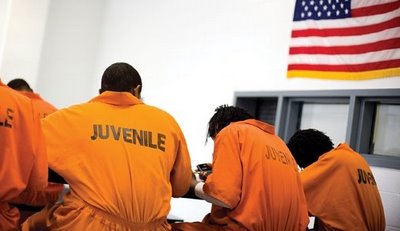
Locking Our Children Away: Sermon for Erev Yom Kippur 5772

Cedric Cal was born to a single mother, in a family that lived below the poverty line on Chicago’s West Side. His father had left the family, married another woman and had very little to do with him. His mother Olivia worked constantly, doing her best to keep her family together. As the oldest of four, Cedric became the de facto father of the family and was entrusted with protecting his younger brother, who was legally blind.

Cedric’s family moved around a lot and he learned very early on how to make friends quickly. He liked sports, particularly baseball – and when his family lived on the West Side, he played sports in the local Park District. When they moved to the South Side, however, there were no Park District services available, so sports were not an option for him. Still, no matter where they moved, Olivia became very adept at finding ways of getting Cedric and and brothers into decent public schools. From 5th to 8th grade, he attended Alcott Elementary. Minding his younger brother, he took the public bus every day on a long trek from the West Side to Lincoln Park.

Cedric’s mother taught him how to fill out applications and interview for jobs, but there really weren’t any to be found. And those that were hiring certainly weren’t hiring African-American teenage boys. He was never really successful at finding a real job,  but when he was 14 he learned that he could make money dealing drugs. He knew that his mother would be beyond furious if she ever found out, so he made sure to keep his drug dealing and his growing gang activity secret from her. Cedric never, ever, brought his earnings into their home – his mother had made it clear that drug money was not welcome anywhere near her house. Even when he bought a car, he parked it far away from their home.

I met and spoke with Cedric two weeks ago at the Stateville Correctional Center in Joliet. He explained to me that as he continued to sell drugs, as he continued the gang life, little by little, he became “desensitized to the things my mother had taught me.” It was quite poignant and sweet to listen to Cedric speak about his mother. “My mother,” he said, “has a lovely spirit,” adding: “I was scared to death of my mother.” He told me of one instance in which Olivia confronted drug dealers on a street corner with a two by four in her hand. Cedric laughed and said that could scare even the toughest gang members in the neighborhood.

Continue reading

The Season of Our Service: Sermon for Erev Rosh Hashanah 5772

As my Torah study students will attest, the book of Deuteronomy can be pretty tough stuff. Deuteronomy, of course, is the final book of the Torah, and most of it is a monologue delivered by Moses to the Israelites before they cross into the Promised Land. As Moses is about to die, he engages in a kind of review lesson for the people, relating their history, describing their journey and reminding them of the laws they have agreed to as part of their covenant with God.

This last part – the theological emphasis on the covenant – is a major theme in Deuteronomy. Over and over, God tells the Israelites through Moses: “You’re about to enter the Land. Just follow my laws and you’ll be fine. But break them and you’ll be very, very, sorry.”

It’s really not to hard to discern these theological threats throughout Deuteronomy– in fact we read them over and over and over again. God tells the Israelites that a deal’s a deal – and they had better hold up their end or else. And of course the “or else” is spelled out repeatedly – often in gruesomely vivid detail.

Now, of all the laws contained in this covenant, there is one in particular that God seems particularly uptight about: that is, namely, the law against worshiping other gods. That’s not to say God isn’t concerned about laws such as murder, theft, providing for the poor, caring for the stranger… While these kinds of laws are certainly mentioned, the stakes always seem to be the highest when it comes to the commandment against idolatry – against serving gods of foreign nations.

Continue reading

A Song of Ascents for Rosh Hashanah

My new take on Psalm 126 – it feels just right for Rosh Hashanah.

Shanah Tovah U’Metukah – May you and may we all be blessed with a sweet and renewing New Year!

Psalm 126
My song of assent
I will return from this exile
wake up
from this bad dream
my crazy laughter’s busting out
I’m learning to sing
all over and over and over
again
only now do I know
you were there all along
coaxing me along to this
place of my return oh yes
you’ll bring me home
like water
roaring down dry river beds
I’ll be coming home
those who sowed with tears
will reap with joy
those who bury their pain deep
will soon gather
their bountiful harvest

More Poetry for Elul

From the great Canadian-Jewish poet, Shulamis Yelin (1913-2002):

In your image,
in your image, God,
You made me in your image,
and I reach upward, seeking –
to be like You, God.

Just? Like You I’m vengeful.
Merciful? Like You I seek an understanding heart.
Jealous? Yes, I’m jealous
and iniquitous
and long suffering –
and like You
I dream to make a world,
(in miniature, God),
to do my bidding.

And loving I can be, yes, loving,
to a penitent, punished child.

Yet clearly, God, most clearly,
do I see in me your oneness,
your all-oneness,
your aloneness –
in my heart.

For Elul: All Things Must Pass

[youtube:http://www.youtube.com/watch?v=g-ATb5FNci8%5D

For your Elul viewing/listening pleasure:

Here is a clip from the “Concert for George,” which was held in November 2002 on the first anniversary of George Harrison’s death. It was a star-studded affair organized by his family and arranged as a benefit for Harrison’s charitable foundation.

Among the many memorable moments in the concert was this performance of Harrison’s solo classic, “All Things Must Pass” sung by Paul McCartney. I find it quite moving to listen to the spiritual message of the song, doubly meaningful on this particular occasion. (Not to mention watching Harrison’s son Dhani – the spitting image of his father – playing backup guitar.)

All things must pass
All things must pass away
All things must pass
None of life’s strings can last
So, I must be on my way
And face another day

Now the darkness only stays the night-time
In the morning it will fade away
Daylight is good at arriving at the right time
It’s not always going to be this grey

My Father, the Wandering Aramean…

In this week’s Torah portion, Ki Tavo, God instructs the Israelites, upon entering the Promised Land, to offer up the first fruits of their harvest. They are then to recite a short narrative of their history, beginning with their earliest ancestors and ending with their own arrival at the land.

This narrative, made famous by its central place in the Passover Haggadah, begins thus:

My father was a wandering Aramean. He went down to Egypt with meager numbers and sojourned there; but there he became a great and very populous nation…” (Deuteronomy 26:5)

The opening words of this passage have been the subject of considerable controversy for centuries. According to most commentators, the “wandering father” is identified as Jacob. This would certainly fit neatly into the Biblical narrative, as Jacob did indeed go down to Egypt with his sons during a period of famine.

In the traditional Passover Haggadah, however, the Rabbis translate the Hebrew “My father was a wandering Aramean” (“arami oved avi“) very differently.  By changing the vocalization of the Hebrew “oved” (“wandering”) to “ibed” (“destroyed”), they render the text to mean: “An Aramean sought to destroy my father.” (The Haggadah identifies this would-be murderer as Laban who, by threatening Jacob, “sought to uproot us all.”)

So which is it?

In true Jewish fashion, the debate rages on. Among the classical commentators, Rashi supports the Haggadah’s reading, while others, including Ibn Ezra adhere to the conventional interpretation. Rashbam accepts the “wandering Aramean” interpretation as well, but identifies the wanderer as Abraham rather than Jacob.

Beyond the fancy hermeneutics, however, I’m struck by the two spiritual models suggested by these respective translations. One highlights our wanderings, identifying our peoplehood with our collective seeeking – our desire to journey toward a better and more blessed future. The second model suggests we are essentially a hunted and hated people, forever on the run from those who would seek our destruction.

These two readings illuminate a critical question that inform our collective Jewish self-understanding to this very day.  Centuries later, the question remains: with which narrative will we identify?  The narrative in which we are the perpetual victim or the spiritual seeker? Does our story forever pit us against an eternal enemy – or does it ultimately celebrate our sacred purpose and the promise of blessing?

For Elul: Robi’s Letter

Some more Elul reading material for you:

In March 2002 Robi Damelin’s 28 year old son, David, was shot and killed by a Palestinian while serving in the Israeli army. Robi has since become a leader in The Parents’ Circle, a group of Israeli and Palestinian families whose lives have been torn apart by violence and now work together for reconciliation and peace.

As part of her own work, Robi decided to take the courageous step of writing a letter to the mother of the man who killed her son.  I can think of nothing more appropriate to this season of our reconciliation than Robi’s profound words.

An excerpt:

After your son was captured, I spent many sleepless nights thinking about what to do, should I ignore the whole thing, or will I be true to my integrity and to the work that I am doing and try to find a way for closure and reconciliation. This is not easy for anyone and I am just an ordinary person not a saint I have now come to the conclusion that I would like to try to find a way to reconcile. Maybe this is difficult for you to understand or believe, but I know that in my heart it is the only path that I can chose, for if what I say is what I mean it is the only way.

Click below for the entire text:

Continue reading

A Radio Story for Elul

Your next homework assignment for the month of Elul is to listen to this recent piece from NPR’s “This American Life.”  I chose it because so much of our spiritual preparation during this season focuses on our struggle with change. Is it truly possible to turn our lives around?  How do we hold on to our faith in our ability to change – and the potential of others as well?

The hero of this story is an amazing woman named Ton’Nea Williams who, while working at a juvenile detention facility, befriended a boy named Kenneth and attempted to set his life on the right path. As you will hear, the story takes some unexpected twists and turns. I particularly admire it because it asks the most essential questions, but refuses to provide us with easy answers.

The program lasts approximately a 1/2 hour, but trust me, this story is well worth your time – and is utterly appropriate to our Elul preparations.