Isaac Digs a Well

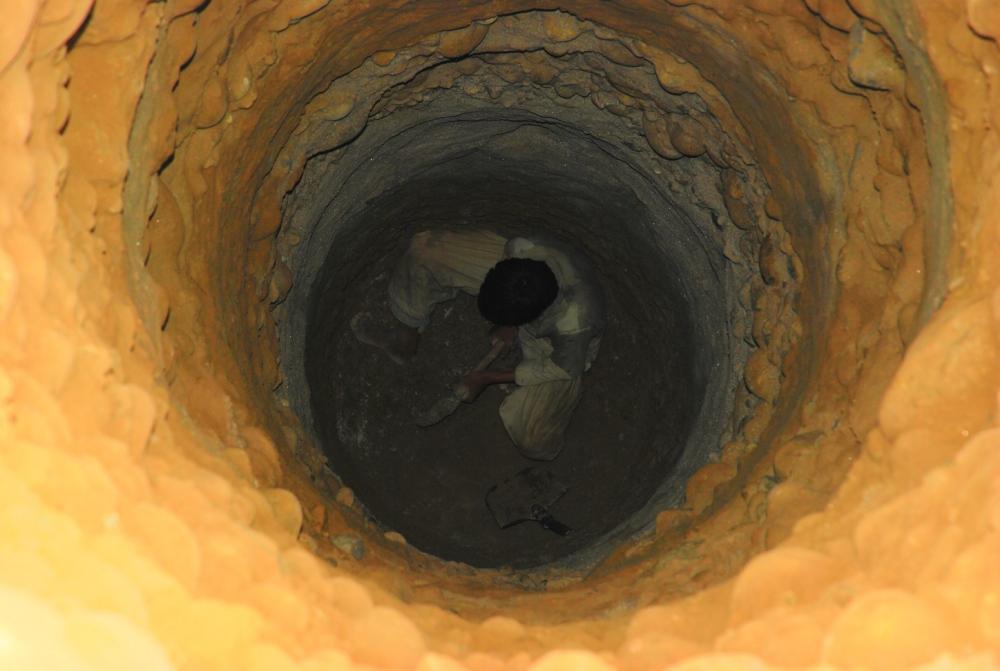
so isaac departed from there and
encamped in the wadi of gerar where
he dug anew the wells
which had been dug in the days
of his father abraham digging
deep he’s clawing at the
dry dead earth those long
buried voices leaking out
gurgling up like hidden springs burst
open cast out that horrid slave woman and her son
now take your other son whom you love so very
very much and bind him up tight don’t
worry god will provide for the sacrifice my
boy so he named that well sitnah that means
pain his eyes so filled with his hot
tears he doesn’t notice at
first the ground growing softer and
sweeter who is this woman
walking in the field toward me
i am your god fear not for
i am with you i will bless you i
will keep you safe so isaac changed
the name of the well to rechovot that means
god had torn open his bindings and
gave his soul wide open space to
roam when he woke up his servants
came to him and told him about the well they
had dug and said to him we have
found water

(Genesis 26:18, 21, 32)

On Giving Thanks

“Thanks”

by W.S. Merwin

Listen
with the night falling we are saying thank you
we are stopping on the bridges to bow from the railings
we are running out of the glass rooms
with our mouths full of food to look at the sky
and say thank you
we are standing by the water thanking it
smiling by the windows looking out
in our directions

back from a series of hospitals back from a mugging
after funerals we are saying thank you
after the news of the dead
whether or not we knew them we are saying thank you

over telephones we are saying thank you
in doorways and in the backs of cars and in elevators
remembering wars and the police at the door
and the beatings on stairs we are saying thank you
in the banks we are saying thank you
in the faces of the officials and the rich
and of all who will never change
we go on saying thank you thank you

with the animals dying around us
our lost feelings we are saying thank you
with the forests falling faster than the minutes
of our lives we are saying thank you
with the words going out like cells of a brain
with the cities growing over us
we are saying thank you faster and faster
with nobody listening we are saying thank you
we are saying thank you and waving
dark though it is

Ephron the Hittite Quotes a Price

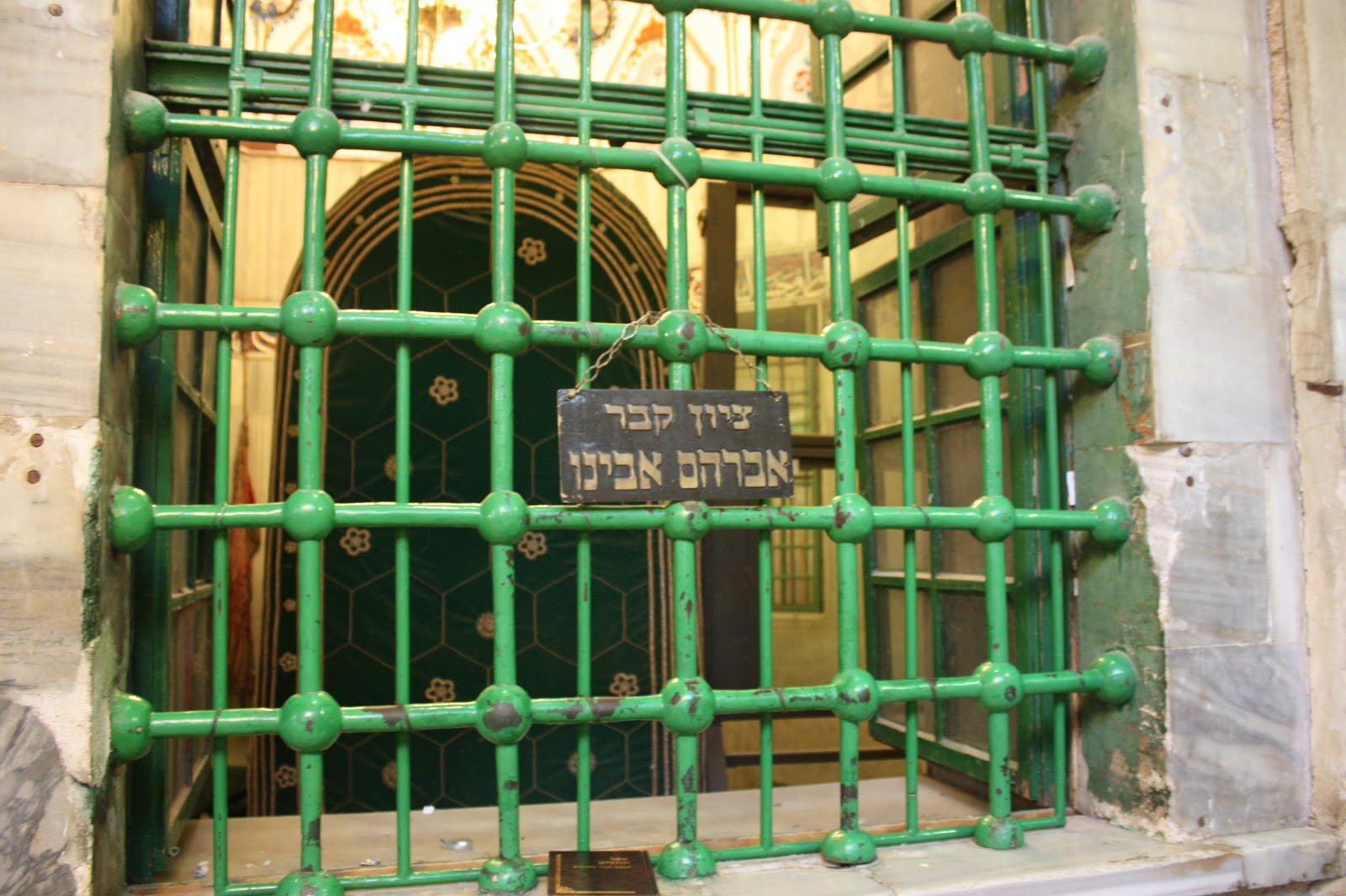
abraham arose from beside his
dead and staggered into
the town square blinking
back his grief squinting into the white hot
noonday sun he said
i am but but a resident alien among you
sell me a burial site that i may remove
my dead for burial

ephron the hittite eyed the
frayed gash on abraham’s robe you
think four hundred shekels is
a bargain trust me my
friend you’ll never finish
paying for this
dirty stinking cave go
ahead and bury your dead

when abraham breathed his last his
his sons isaac and ishmael buried
him in the cave he had purchased then
god blessed his son isaac oh
believe me someday
this place is
going to cost us
all dearly

(Genesis 23:3-4, 14, 25:8-9)

Abraham Argues With God, Tokyo 1945

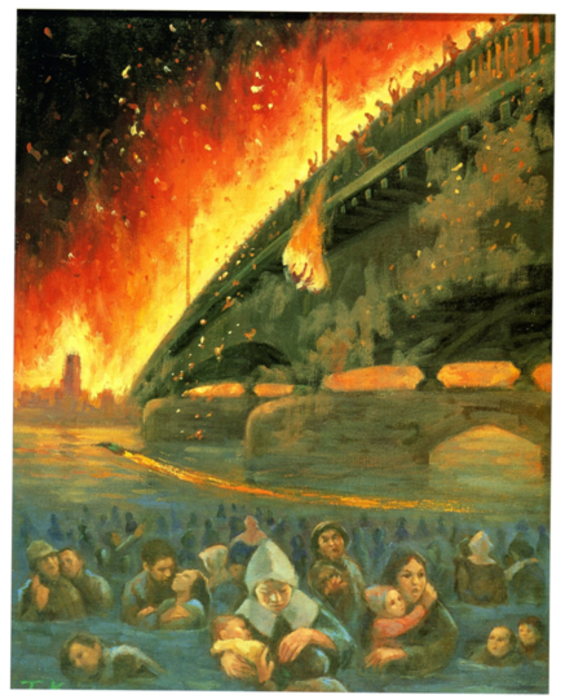
"The Flames of Kototoi Bridge—Memories of Losing my Family," painting by Kano Teruo

will you sweep away innocent with
the guilty what if there are
fifty innocent within the city will
you wipe out the place far be it from
you to do such a thing to
bring death upon the innocent the
M-69s which released 100-foot streams of fire upon
detonating sent flames rampaging through
densely packed wooden homes superheated air created
a wind that sucked victims into the flames and
fed the twisting infernos asphalt
boiled in the 1,800-degree heat with much of
the fighting-age male population at the war
front women children and the elderly
struggled in vain to battle the flames or flee
like other survivors nihei who escaped the fire with her
family intact said the bombing showed that war is
never justifiable those images in my mind can never
be erased she said i can see myself there the
flames all around me and i’m running for my
life shall not the judge of all the
earth act justly?

(Genesis 18:23-25 with AP article, “1945 Tokyo Firebombing Left Legacy of Terror, Pain” by Joseph Coleman)

Avram and Sarai Take Their Leave

you must
go leave your
native land leave behind all
you know all you
have all you
love shatter everything your
father holds sacred your mother’s desperate
hopes and dreams crazy shards
flying up pinwheeling like sparks spinning
off a sacrificial
fire go beyond leap into the
dark to a place you do
not know and maybe never will
offer up your trust like
a writhing bleating newborn
lamb on the altar yes go and seek
your blessing find your place among the families
of the earth you really think you’re so
different what makes you so
special

(Genesis 12:1-3)

God Considers the Generation of Noah

the earth is filled with it
creation’s choking on it
gone horribly wrong the bloodshed so much
blood soaking the earth polluting
the earth cries out to me shrieking
just shrieking out to me i can’t stand it
any more i can’t think i can’t
hear myself think what was i
thinking what was i thinking
i am undone i
will undo tear down the
firmament open up the
floodgates let the waters
let chaos rain down
let the dark waters below
rise up let’s undo creation
wash the earth clean what have i
done
seemed like such a good
good idea at the
time

(Genesis 6:11-12, 7:11)

A Poem for Sukkot: The Season Turns

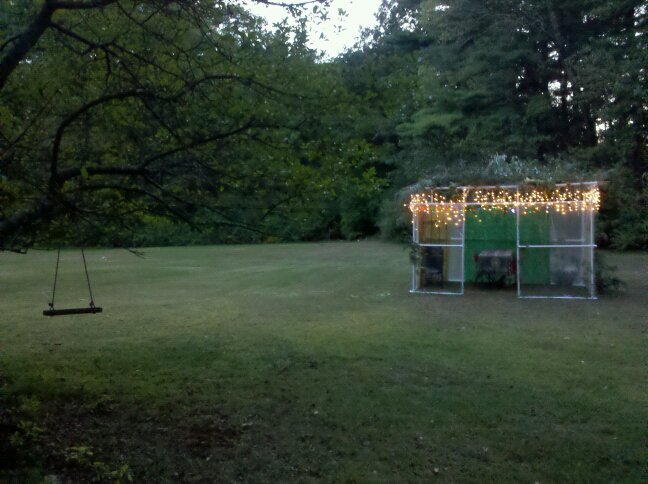
It’s the festival of Sukkot – the holiday in which we (among many other things) liturgically chant from the book of Ecclesiastes.

Here, below, is my new version of the most famous part: Chapter 3, verses 1 through 8.

Kohelet 3:1-8

an eon turns to a millisecond
swing from here and to
there keeping rhythm here
to there and back again we are
born and we
die we plant and
we uproot
we kill we heal we
destroy and we rebuild again
we cry out and we laugh to the high
high heavens we throw stones and
gather them up once
more we embrace and we turn
away cast our eyes down
down to the ground we seek and
we lose we may yet find we
hoard and we purge we tear
and then sew back up we hold our tongues
and we scream like rain
we’re spitting in the wind
such a fine fine line between
love and hate and war
and peace enjoy it
while you can

A Song of Ascents for Rosh Hashanah

My new take on Psalm 126 – it feels just right for Rosh Hashanah.

Shanah Tovah U’Metukah – May you and may we all be blessed with a sweet and renewing New Year!

Psalm 126
My song of assent
I will return from this exile
wake up
from this bad dream
my crazy laughter’s busting out
I’m learning to sing
all over and over and over
again
only now do I know
you were there all along
coaxing me along to this
place of my return oh yes
you’ll bring me home
like water
roaring down dry river beds
I’ll be coming home
those who sowed with tears
will reap with joy
those who bury their pain deep
will soon gather
their bountiful harvest

More Poetry for Elul

From the great Canadian-Jewish poet, Shulamis Yelin (1913-2002):

In your image,
in your image, God,
You made me in your image,
and I reach upward, seeking –
to be like You, God.

Just? Like You I’m vengeful.
Merciful? Like You I seek an understanding heart.
Jealous? Yes, I’m jealous
and iniquitous
and long suffering –
and like You
I dream to make a world,
(in miniature, God),
to do my bidding.

And loving I can be, yes, loving,
to a penitent, punished child.

Yet clearly, God, most clearly,
do I see in me your oneness,
your all-oneness,
your aloneness –
in my heart.

How to Pray, 21st Century Style


I’m sorting through tons of poems to include in our High Holiday supplements and discovering some really wonderful stuff. Can’t resist sharing this one:

Pray for Peace

by Ellen Bass

Pray to whomever you kneel down to:
Jesus nailed to his wooden or plastic cross,
his suffering face bent to kiss you,
Buddha still under the bo tree in scorching heat,
Adonai, Allah. Raise your arms to Mary
that she may lay her palm on our brows,
to Shekhina, Queen of Heaven and Earth,
to Inanna in her stripped descent.

Then pray to the bus driver who takes you to work.
On the bus, pray for everyone riding that bus,
for everyone riding buses all over the world.
Drop some silver and pray.

Waiting in line for the movies, for the ATM,
for your latte and croissant, offer your plea.
Make your eating and drinking a supplication.
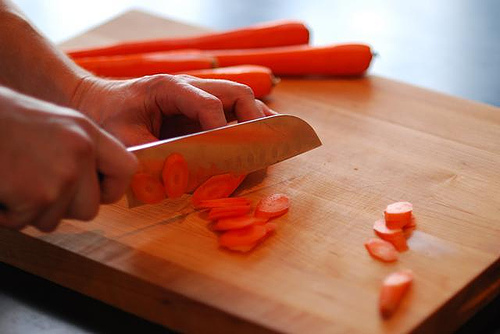
Make your slicing of carrots a holy act,
each translucent layer of the onion, a deeper prayer.

To Hawk or Wolf, or the Great Whale, pray.
Bow down to terriers and shepherds and Siamese cats.
Fields of artichokes and elegant strawberries.

Make the brushing of your hair
a prayer, every strand its own voice,
singing in the choir on your head.
As you wash your face, the water slipping
through your fingers, a prayer: Water,
softest thing on earth, gentleness
that wears away rock.

Making love, of course, is already prayer.
Skin, and open mouths worshipping that skin,
the fragile cases we are poured into.

If you’re hungry, pray. If you’re tired.
Pray to Gandhi and Dorothy Day.
Shakespeare. Sappho. Sojourner Truth.

When you walk to your car, to the mailbox,
to the video store, let each step
be a prayer that we all keep our legs,
that we do not blow off anyone else’s legs.
Or crush their skulls.
And if you are riding on a bicycle
or a skateboard, in a wheelchair, each revolution
of the wheels a prayer as the earth revolves:
less harm, less harm, less harm.

And as you work, typing with a new manicure,
a tiny palm tree painted on one pearlescent nail
or delivering soda or drawing good blood
into rubber-capped vials, writing on a blackboard
with yellow chalk, twirling pizzas–

With each breath in, take in the faith of those
who have believed when belief seemed foolish,
who persevered. With each breath out, cherish.

Pull weeds for peace, turn over in your sleep for peace,
feed the birds, each shiny seed
that spills onto the earth, another second of peace.
Wash your dishes, call your mother, drink wine.

Shovel leaves or snow or trash from your sidewalk.
Make a path. Fold a photo of a dead child
around your VISA card. Scoop your holy water
from the gutter. Gnaw your crust.
Mumble along like a crazy person, stumbling
your prayer through the streets.