A Jewish Prayer for Nakba Day

Nakba.jpg-keys

Le’el she’chafetz teshuvah,
to the One who desires return:

Receive with the fulness of your mercy
the hopes and prayers of those
who were uprooted, dispossessed
and expelled from their homes
during the devastation of the Nakba.

Sanctify for tov u’veracha,
for goodness and blessing,
the memory of those who were killed
in Lydda, in Haifa, in Beisan, in Deir Yassin
and so many other villages and cities
throughout Palestine.

Grant chesed ve’rachamim,
kindness and compassion,
upon the memory of the expelled
who died from hunger,
thirst and exhaustion
along the way.

Shelter beneath kanfei ha’shechinah,
the soft wings of your divine presence,
those who still live under military occupation,
who dwell in refugee camps,
those dispersed throughout the world
still dreaming of return.

Gather them mei’arbah kanfot ha’aretz
from the four corners of the earth
that their right to return to their homes
be honored at long last.

Let all who dwell in the land
live in dignity, equity and hope
so that they may bequeath to their children
a future of justice and peace.

Ve’nomar
and let us say,
Amen.

Le’el she’chafetz teshuvah,
to the One who desires repentance:

Inspire us to make a full accounting
of the wrongdoing that was
committed in our name.

Help us to face the terrible truth of the Nakba
and its ongoing injustice
that we may finally confess our offenses;
that we may finally move toward a future
of reparation and reconciliation.

Le’el malei rachamim,
to the One filled with compassion:
show us how to understand the pain
that compelled our people to inflict
such suffering upon another –
dispossessing families from their homes
in the vain hope of safety and security
for our own.

Osei hashalom,
Maker of peace,
guide us all toward a place
of healing and wholeness
that the land may be filled
with the sounds of joy and gladness
from the river to the sea
speedily in our day.

Ve’nomar
and let us say,
Amen.

Feeding the God of Compassion

brain-01

In the Torah portion, Parashat Ki Tisa (Exodus 30:11 – 34:35), we find Moses on the top of the mountain and the Israelites growing restless. They’re not sure if Moses will ever come back, so they pressure Aaron into helping them build a Golden Calf that they can worship (“that will go before us.”) God inevitably becomes infuriated and threatens to wipe all of the Israelites. Though Moses eventually talks God off the ledge, God later sends a plague upon the people as punishment.

A little later on in our portion however, God appears to have reformed completely. When God passes by Moses on the top of Mt. Sinai, God’s divine attributes are described as: “compassionate and slow to anger, abounding in kindness and faithfulness, extending kindness to the thousandth generation, forgiving iniquity, transgression and sin.”

So which one is the real God? The punishing authority figure or the unconditionally loving parent? The angry warrior who demands that we dislodge and destroy the inhabitants of Canaan or the compassionate exemplar who commands us to love our neighbor as ourselves?

As I grapple with this question, myself, I’ve come to accept that whether we like it or not, both of these “Gods” are a part of our tradition. As much as we’d like to, we can’t wish away or surgically excise the nasty God from our sacred texts. On the contrary: if we really intend to be serious about incorporating Biblical tradition into our spiritual lives, we need to be prepared to own and confront the “everything” of that tradition.

For me that means asking this question openly and unflinchingly: if the Torah teaches us that human beings are made in the image of God, which image of God will we proclaim? The God of anger or the God of forgiveness? The God of hatred or the God compassion? The God of harsh judgement or the God of loving acceptance?

Needless to say, classical Jewish tradition has had a great deal to say about these questions throughout the centuries. You may be interested to know that contemporary neuroscience has been exploring these issues as well. Over the past decade or so in fact, physicians have been investigating the ways in which spirituality is rooted in the biology of the brain. By combining the fields of neuroscience and religious studies, they’re helping us to actually understand how our neurological makeup influences the ways we experience God.

Several years ago, Dr. Andrew Newberg, the founder of the Center for Spirituality and the Mind at the University of Pennsylvania, explored these issues in his book, “Why God Won’t Go Away: Brain Science and the Biology of Belief.” This was Dr. Newberg’s basic premise:

Every event that happens to us or any actions that we take can be associated with activity in one or more specific regions of the brain. This includes, necessarily, all religious and spiritual experiences. The evidence further compels us to believe that if God does indeed exist, the only place (God) can manifest (God) existence would be in the tangled neural pathways and physiological structures of the brain.

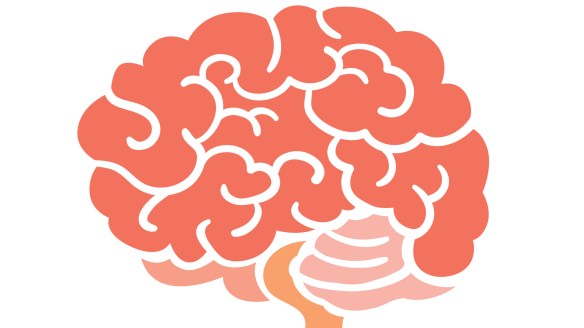
For me, the most amazing findings of this research demonstrate the way God has evolved neurologically over the centuries. In a later book, “How God Changes Your Brain,” Newberg posited that different experiences of God actually correlate to the development of the human brain. Neurologically speaking, researchers have located the angry, authoritarian God in the limbic system, which houses the oldest and most primitive structures of the brain. This includes the amygdala – the little almond-shaped organ that generates our “fight or flight” response.

The benevolent, compassionate God, on the other hand, can be found in our frontal lobes, and particularly in a structure known as the anterior cingulate. These are the parts of the brain most primarily associated with our experience of compassion and empathy. Compared to the ancient limbic system, these structures are the most recently evolved parts of our brain and they appear to be unique to human beings. This is how Newberg put it:

Something happened in the brains of our ancestors that gave us the power to tame this authoritarian God. No one knows exactly when or how it happened, but the neural structures that evolved enhanced our ability to cooperate with others. They gave us the ability to construct language and to consciously think in logical and reasonable ways…Without these new neural connections, humans would be limited in their ability to develop an inner moral code or a societal system of ethics.

To be clear: this is not an argument for doing away with our brain stems. We obviously cannot survive without them. And we cannot deny that there may well be times in our lives when anger, fear and vigilance are warranted. The problem, of course, is that we can too easily let our limbic systems run wild. Indeed, neurological research demonstrates that whenever we let our anger or fear overpower us, brain activity in our frontal lobes gets shut down. When this happens, our “fight or flight” response is generated, and it spreads rapidly throughout our brains.

We’ve long known that excessive anger or fear can cause problems like high blood pressure and cardiovascular disease. Studies also show that extreme anger can permanently disrupt structures in both our brains that control basic functions like memory storage and cognitive accuracy. In other words, when we indulge our anger, we feed the more toxic and destructive manifestations of God.

In Jewish terms, this research remindes me of the famous dynamic between the Yetzer Hara (“the bad inclination”) and the Yetzer Hatov (“the good inclination.”) The rabbis made sure to point out that the Yetzer Harah was an essential aspect of our humanity. The conventional translation of ra and tov as “good” and “evil” is not tremendously helpful in this regard. The sages, in fact take pains to point out that we need them both. Whether we like it or not, these impulses are a part of us – much like our limbic system is an essential and necessary part of our brain. The point is not to deny or repress our Yetzer Hara, but to channel and master it. As the verse from classic rabbinic text Pirke Avot teaches: “Mi hu gibor? Mi’she kovesh et yitzro” – “Who is mighty? The one who masters one’s yetzer (hara).”

So how do we do this? By consciously channelling our “fight or flight” impulses while exercising those frontal lobes. Or another way of putting it: by keeping our baser instincts in check while nurturing our capacity for kindness. And believe it or not, science itself is proving that compassion and empathy can be neurologically contagious. Studies demonstrate conclusively that there is increased activity in the compassion center of the brain whenever we perceive others as being sensitive to our needs. Scientists have also concluded through research that the more positive contact we have with members of other different religions, cultural, and ethnic groups, the less prejudice we tend to harbor in our brains.

So to return to our portion, I’m struck that it when God witnesses the Golden Calf episode, we read an all too human description of a limbic system run amok. Interestingly enough, it is Moses himself who serves as the frontal cortex in this case, keeping God from indulging the impulses toward annihilation.

I can’t help but think there is a profound neurological/ethical lesson for us in all of this. Given the precarious nature of our 21st century reality, I’d suggest we need to heed this lesson now more than ever.

Sealing the Gates of Heaven

sealed_gate

According to an order from the most high
the first day of the month shall be a sacred occasion
when the shofar is sounded the gates will be sealed
and all roads will be closed to you.
You shall not you leave your homes
nor work at your occupations.
lest you and your kin be put to death.

Like fires lit on ancient mountaintops
the announcement spread throughout the land;
when the new moon came the wall was locked tight
so the people could gather in their houses of prayer
to greet another new year.

And the Chazan sang:
As a shepherd numbering his flocks
passing his sheep under his staff
thus I count you off one by one,
marking your every move, noting your every thought
writing you down in my Book of Life
that I may decree
who shall live and who shall die.

Day after day they sent out
fearful prayers into the dark dread
of a year they did not yet know,
desperately hoping their lives would be spared
by the merciful judge on high.

For today it is written
and in ten days it will be sealed
who will be taken in the dead of night
and who shall sleep until morning
who will die and who will be born
into this cruel and pitiless world

When the festival came to an end
the great shofar was sounded
and a still small voice was heard:
The gates of heaven are sealed;
they will not open to your prayers.

Songs at the Sea

waters

After Exodus 15:1-18

As the waters parted before them
they sang their songs of praise:

Some sang to the one who
shattered Pharaoh’s army
with a mighty right hand,
some sang to the god of their ancestors
who remained faithful to them
and them alone.

Others sang to the one
who redeems the oppressed
so that the world may know of his might:
who is like you god of war,
consuming the enemy like straw
incinerated with one awesome
mighty blast from on high?

Some sang a hymn of praise
to the god of vengeance,
who shamed the Egyptians
hurling them all like stones
into the heart of the churning sea;

still others sang out with hope
that the peoples of the land
they were promised
would now melt away
as god’s people went forth
to dispossess them.

As they marched on
their voices joined into one feverish song;
a tuneless wordless howl
that echoed on and on
before finally disappearing
somewhere in the deep.

This is How You Will Restore the Temple

177299138

A new rendering of Zechariah 2:14 – 4:7 (Prophetic reading for the Sabbath of Hanukkah)

Let loose your joy for
your prayers have
already been answered;
even in your exile
the one you seek has been
dwelling in your midst
all along.

Quiet your raging soul
and you will come to learn:
every nation is my nation
all peoples my chosen
anywhere you choose to live
will be your Holy Land,
your Zion, your Jerusalem.

Open your eyes and
look across the valley
look at this ruined land
seized and possessed
throughout the ages.

Look upon your
so-called city of peace
a place that knows
only debasement
and desecration
at your hand.

Turn your gaze to the heavens
and there you will find
the Jerusalem that you seek:
a city that can never be conquered,
only dreamed of, yearned for, strived for;
a Temple on high that can never be destroyed.

No more need for priestly vestments
or plots to overrun that godforsaken mount –
just walk in my ways
and you will find your way there:
a sacred pilgrimage to the Temple
in any land you call home.

Enter the gates to
this holiest of holy places,
lift up its fallen walls,
relight the branches of the lamp
so that my house will truly
become a sanctuary
for all people.

Yes, this is how you will
restore the Temple:
not by might, not by power
but by the spirit
you share with every
living, breathing soul.

Ma’ariv Aravim: Blessed is Evening’s Fall

sunset-over-the-clouds

Blessed is evening’s fall,
the heaven’s transformation,
the ever-changing seasons.

Blessed is the imperceptible movement
of one moment into the next,
notes in a seamless melody
you are composing for us
even now.

Blessed is the light that
dances through the darkness,
warming us in the radiance
of a new day returning
to greet us once more.

Blessed is the darkness
that swaddles and bathes us
in your dark beauty,
comforting us with the sweet promise
of liberation at long last.

Blessed is evening’s fall.

psalm 90: your so-called fortress

Medieval Akkerman fortress near Odessa in Ukraine

you’ve been my refuge,
or so i’ve been told since
the day i first learned how to sing
those rapturous hymns
to my stronghold, my fortress,
my shield.

you may have noticed
i don’t sing those songs any more
or maybe you haven’t,
maybe the cacophony of all
these desperate hosannas
are just background noise to you –
a faint and constant buzzing
in the halls of your mansions on high.

oh yes, you’ve been my refuge.
or maybe more accurately my escape,
my pretense, my excuse.
looking back i think the moment
my song began to falter
was the moment
i came to question the purpose
of your so-called fortress:

did you build it to keep me safe
or merely complacent?
to teach me your ways
or to keep me in line?
to shelter me from the storm
or protect me from the sorrows
that inevitably lay beyond?

New For Yom Kippur: Isaiah 57:14-58:14 Reimagined

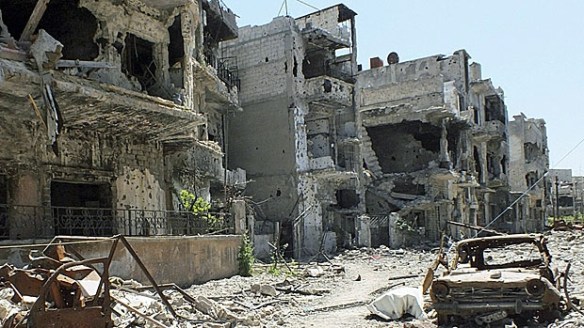
syria-alleppo-620-rtxz39z

Stop for just this moment
and consider:
the roads you are traveling
will not lead you to my kingdom.
You journey so proudly
so blindly
through this barren land
and I can abide it
no longer.

Your false piety
has become unbearable to me.
You look up to the skies,
you say all the right prayers
yet somehow you cannot see
that the world is coming apart
all around you.

You look for me endlessly,
you ask me to show you the way;
how can you be so eager to know me
yet so unwilling to see my face
in the one who is standing
right next to you?

You fast on this holy day of yours
while children go hungry in your own city
and families line up for bags of grain.
You pray for your martyrs,
you recite Yizkor and Kaddish
then sell handguns and Apache helicopters,
and profit from the blood they spill.

You call for inclusion and compassion
while you build a system of racism
and oppression that grows
without end.
You march for peace
but refuse to see the difference
between the hollow peace
of domination and control
and the true peace
of justice for all.

You advocate for human rights
in far off lands
and yet you lock up and shoot down
black and brown bodies
in your own backyard.
You chant from your holy texts:
“do not oppress because
we were once oppressed”
while you occupy another people.
You wield your legacy of victimhood
like a weapon
as you expel and expropriate,
build checkpoints and demolish homes.

You preach of freedom
and democracy
and yet you treat the world
as your personal fiefdom.
you topple governments of nations
that refuse to serve your interests,
prop up tyrannical regimes
to ensure your hegemony.

Your fast today is meaningless to me.
Do you really think this is the fast I desire:
to forgo food for one day
to intone the same prayers
to confess the same sins
year after year?
Do you believe such a fast,
will make a difference?

No, this is the fast I desire,
dismantle your systems of oppression
open wide your prisons,
tear down your separation walls,
destroy your weapons of death
let justice rule in your streets.

Open wide the vaults and
share your abundant wealth so that
all are fed and clothed and sheltered.
Bring in the immigrants,
let the refugees return home
at long last.

These are the sacred sacrifices
I have been asking of you all along.
Do you think you are up to the task?
Will you offer them to me?
Will you let go of your old ways,
your hollow meaningless rituals
and find the courage to worship
with offerings that I truly require?

Are you ready to spread my healing
across this broken bleeding world,
to stop looking forward and behind,
and venture into the dark places
you would never dare to tread,
only to realize that you have been
dwelling there all along?
Do you have the strength to say
to the ones whom you find there:
hineini
here I am, here I am,
here I am.

These sacrifices you offer up to me
cannot possibly be sustained.
Your well will run dry,
the source of your very lives
will be depleted and soon
you will have nothing left to give.

So let these wells dry up,
seek out the springs that give forth
life giving waters without end.
Restore the foundations of my world
Tear down the walls you have built,
Rebuild the homes you have destroyed
Erase the borders that you have drawn.

Open your sidewalks and pathways,
your roads and highways,
clear the way for all
to find their way without fear
and you will discover a place
you never dreamed could
ever possibly exist:

the place where the low is brought high
and the high is brought low:
the kingdom of heaven
that dwells right here
on earth.

Torah Retold: Which Voice Shall I Heed?

2

venturing beyond the wilderness
he came to the mountain and
saw the sounds bursting from the flames
a blazing fire that burned insatiably
but was not consumed
voices calling to him over and
over again until he finally
opened his eyes and cried out
hineini here i am

one voice said i am the god of history
another said i am the one that is ever yet to be
another said i will keep you safe another said
i will teach you how to fear

another said i cannot bear the pain
of so many oppressed
will you free me from this suffering
another said go to them and tell them
they’ve got a new master now.

another said won’t you bring
my message of liberation to all
who are oppressed another said
you will never be free until you destroy
the people of the land i am giving you
as your inheritance

he asked which voice shall i heed and
which voice shall i say has sent me
but now there was only silence
as the fire lept higher and higher
sparks flying and twisting endlessly
then finally disappearing
into the dark night

(Parashat Shemot, Exodus 3:1-13)

“Who Shall Live?” A New Prayer for Rosh Hashanah

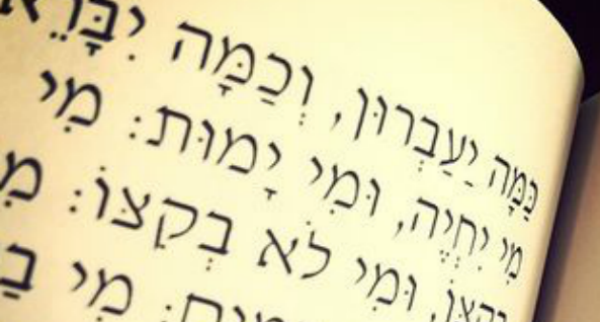
unetaneh

The U’netaneh Tokef prayer is one of the signature moments of the Rosh Hashanah service – the moment in which we invoke the image of a Book of Life for the coming year and ask a litany of versions of the question, “Who Shall Live and Who Shall Die?”

It often seems to me that this prayer is at its core a meditation on the randomness and precariousness of existence – a way of giving voice to our deepest fears over that which we cannot ultimately control in our lives and world.

However the kicker comes at the end: after all the uncertainty, we conclude by proclaiming “But repentance, worship and acts of justice can avert the harshness of the decree.” We do not – cannot – simply end on a note of fatalistic dis-empowerment. U’netaneh Tokef says, in essence, “yes, there is indeed harsh cruelness in our world – so what do we intend to do about it?”

After all, so much of what seems random in our world is in fact the blowback of our own actions, individual and collective. While it may be temping to simply throw up our hands and blame this cruelty on others – or the vicissitudes of a “random world” – the harder truth bids us to take a deeper look within, reckon with our own culpability, and think honestly about what we are prepared to do to make this new year one of peace, wholeness and justice for all.

Here’s a new version of the prayer that I’ve just written for the inaugural Rosh Hashanah service at my new congregation, Tzedek Chicago. Feel free to read and share:

U’netaneh Tokef

We say together:
We declare the terrifying power of this day,
this awesome, sacred day.
We hear the great shofar sounded once again.
We listen for the still, small voice in its wake.

We sing together:
בְּרֹאשׁ הַשָׁנָה יִכָּתֵבוּן וּבְיוֹם צוֹם כִּפּוּר יֵחָתֵמוּן,
B’rosh hashanah yikateyvun, uve’yom tzom kippur yeychatemun.

(On Rosh Hashanah it is written and on Yom Kippur it is sealed.)

We say responsively:
This is the season we dare to ask out loud:
who will live and who will die?

Who by famine and who by war;
who through oppression and who through neglect;

Who by weapons and who by dehumanization;
who through hatred and who through ignorance.

Who in the dark and who in the bright light of day;
who by passion and who by design.

We sing together:
בְּרֹאשׁ הַשָׁנָה יִכָּתֵבוּן וּבְיוֹם צוֹם כִּפּוּר יֵחָתֵמוּן,
B’rosh hashanah yikateyvun, uve’yom tzom kippur yeychatemun.

(On Rosh Hashanah it is written and on Yom Kippur it is sealed.)

We say responsively:
Who will benefit from power and who will be victimized by it;
who will dwell in safety and who will be uprooted.

Who will be targeted and who will be collateral damage;
who will escape and who will fall.

Who will be beaten down and who will rise above;
who will find peace and who will dwell in darkness.

Who will be protected and who will be vulnerable;
who will be counted and who will fall through the cracks.

We sing together:
בְּרֹאשׁ הַשָׁנָה יִכָּתֵבוּן וּבְיוֹם צוֹם כִּפּוּר יֵחָתֵמוּן,
B’rosh hashanah yikateyvun, uve’yom tzom kippur yeychatemun.

(On Rosh Hashanah it is written and on Yom Kippur it is sealed.)

We say responsively:
Who will be privileged and whose chances will be slim;
who will brought in and who will be cast out.

Who will be healed and who will not have access to healing;
who will be fed and who will go hungry.

Who will be loved and who will be despised;
who will reach out and who will turn away.

Who will written in and who will be erased;
who will succumb and who will fight back.

We sing together:
בְּרֹאשׁ הַשָׁנָה יִכָּתֵבוּן וּבְיוֹם צוֹם כִּפּוּר יֵחָתֵמוּן,
B’rosh hashanah yikateyvun, uve’yom tzom kippur yeychatemun.

(On Rosh Hashanah it is written and on Yom Kippur it is sealed.)

Together:
וּתְשׁוּבָה, וּתְפִילָה, וּצְדָקָה מַעֲבִירִין אֶת רֹעַ הַגְּזֵרָה.
U’teshuvah, u’tefillah u’tzedakah ma’avirin et roah hagezeyrah.

(But repentance, worship and acts of justice can overturn the harshness of the decree.)