Unknown's avatar

About Rabbi Brant Rosen

I'm a rabbi, blogger, and activist with a special interest in Israel/Palestine justice work.

Passover Observance Then and Now


and when your children ask you what
do you mean by this rite tell them
in the beginning we offered late night sacrifices
and supplications while our god meted out
punishments against the gods of egypt later
we hid behind behind doorjambs swelled with
dread murmuring pour out your wrath on
those who seek our blood and destroy the nations who know
not your name but now we observe by bursting the
gates of fear wide open proclaiming let all who’ve been
broken gather each another’s scattered
shattered pieces let all who seek liberation
come to the table let all who are hungry
come and eat

(Exodus 12:12, 26-27)

Moses Hearing Voices

god said to moses i established my
covenant with abraham isaac and jacob to
give them the land of canaan this sounds to me like the
voice of imperial ambition god said to moses i will harden
pharoah’s heart that i may multiply my signs and marvels in
the land of egypt this sounds to me like
the voice of insecurity god said to moses i
have spared you in order that my fame may resound
throughout the world this sounds to me like the voice of
hubris god said to moses lift your rod and
i will strike the nile with the blood of our babies let
it overrun the land of egypt until it rots this sounds to
me like the voice of pain god said to moses i have heard the
cries of the israelites i will free them from their
bondage and set them free to serve an even greater
good this sounds to me like the
voice of god

(Exodus 6:2-6, 7:19, 9:16)

A Shiva for the New Millenium?

In his recent NY Times piece, “Mourning in the Age of Facebook,” author/journalist Bruce Feiler suggests what many have long observed: in the post-modern world, we’re witnessing traditional religious mourning practices adapted in ever new and interesting ways.

In his article, Feiler describes at length something he calls “Secular Shiva” – a phenomenon in which he claims he has participated more than once. Here’s his description of this newly adapted Jewish mourning ritual:

Don’t wait for the griever to plan: … With a traditional shiva, the burden falls on the family to open their home to sometimes hundreds of people. If you are considering a “secular shiva,” insist on doing the planning yourself, from finding a location, to notifying guests, to ordering food.

By invitation only. Traditional shivas are open houses; they’re communitywide events in which friends, neighbors and colleagues can stop by uninvited. Our events were more restricted, with the guest of honor suggesting fewer than a dozen invitees. “An old-fashioned shiva would have felt foreign to me,” said my friend Karen, who lost her mother last summer. “I’m more private. If it was twice the size, I wouldn’t have felt comfortable.”

“Would you like to share a few stories?” At the event we held for Karen, she opted to speak about her mom. For 45 emotional minutes, she talked about her mother’s sunny disposition, her courtship, her parenting style. It was like watching a vintage movie.

“I liked speaking about my mom,” she told me. “One, I hadn’t had time to fully grieve because I was so focused on my dad. And two, there was something each of you could come away with about who my mom was in the world.”

At a later event, a Catholic friend who had lost her brother chose not to speak about him. She felt too fragile, she later explained. Instead she handed out CDs with a photo montage of her brother’s life. “I think if I hadn’t had the pictures, I would have felt the need to talk about him.”

The comfort of crowds. While I came away from these events convinced we had hit on a new tool for our circle of friends, I was quickly warned not to assume our model was universal.

“Introverts need to grieve, too,” Ms. Andrews said. “For some, a gathering of this kind might be a particular kind of torture.”

My two cents:

Despite his term “Secular Shiva,” I warmly welcome these sorts of changes Feiler describes here. As someone who routinely attends and helps organize shivas on a fairly regular basis, I’ve noticed that many mourners are already incorporating many of the elements Feiler describes.

I don’t think it’s necessarily a religious/secular issue – I think many who consider themselves religious in a more liberal sense feel fully comfortable adapting the tradition shiva rites to fit their needs. In fact, virtually none of my congregants observe the full, traditional seven-day shiva, the prospect of which invariably feels overwhelming – and in some ways even counterproductive.

As I often tell mourners who ask if it’s “OK” to change or adapt some of these rituals: Absolutely. At the end of the day, I believe the purpose of religious ritual is to serve our needs and not the other way around.

God Felt the Burning

Proxima Centuri - the nearest star to the sun

the israelites cried out to god a
shout hurtling into space shining like a
star that would not die like a luminous
ball of plasma burning on and
on like the thermonuclear fusion of endless boundless
hydrogen that can never be exhausted
light emanating from proxima centauri takes
4.22 light years to be seen on earth it took 400 years
for oppression to transform into
liberation burning white hot but
never consumed

(Exodus 2:23-24)

Monday Morning Quarterbacking on Faith

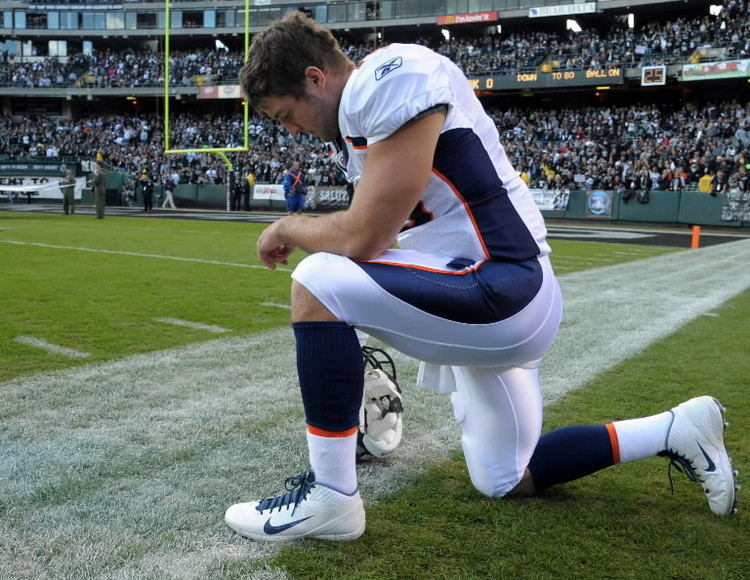
I got into a brief theological kerfuffle in the Twittersphere today over Denver Broncos quarterback Tim Tebow, who openly (and for some, obnoxiously) expresses his evangelical Christian faith. After Tebow led the Broncos to a dramatic overtime win over the Pittsburgh Steelers (and as usual, thanked God for the victory), a friend of mine tweeted:

according to Tebow, God has nothing better to do than help him win football games. Tebow is the Santorum of quarterbacks.

To which I responded:

From a Denver fan pov, it’s not that God wants Tebow to win, it’s that this belief gives him the edge he needs to win games.

My friend then tweeted me back:

Tebow sure doesn’t see it that way. His ostentatious proselytizing is loathsome and contemptible.

My response:

Loathsome and contemptible? I dunno, I don’t agree at all with his politics or theology, but those are pretty strong words. I’d sooner use those words to describe roethlisberger’s behavior than tebow’s…

(Ben Roethlisberger, btw, is the quarterback for the Pittsburgh Steelers, who was accused of sexual assault in 2008 and 2010).

My friend responded to this:

if the best you can say about Tebow is that he’s a better man than Roethlesrapist you’ve made my point for me.

Me:

never said that was the best I could say about him. Only applied ur words more appropriately.

Another Tweeter chimed in:

I can’t fault Tebow for his faith, but I can fault Roethlisberger for his actions.

Further thoughts welcome…

Ce Lo Reimagines “Imagine” (I Wonder If He Can?)

And now some thoughts on one of the most significant religion stories of 2012…

I’m talking, of course, about the upheaval caused when Ce Lo Green sang John Lennon’s “Imagine” in Times Square on New Year’s Eve and changed Lennon’s line “and no religion too” to “and all religions true.”

Wouldn’t you know it, outrage ensued. From the Twittersphere, predominantly:

“Cee-lo ruining John Lennon….not everything needs a remix. Although the message is relevant,” wrote a reader named D’Nai. Said @kevinkieninger: “Cee Lo. There’s some songs you just don’t cover. Like anything by the Beatles or John Lennon.”

“The whole point of that lyric is that religion causes harm. If “all [sic] religion’s true” it would be a pretty bleak place,” remarked @geekysteven, summing up Lennon’s anti-religion philosophy.

Ce Lo later tweeted a semi-apology for compromising Lennon’s universalistic ethic:

Yo I meant no disrespect by changing the lyric guys! I was trying to say a world were u could believe what u wanted that’s all.

My thoughts?  To be honest, my first reaction was to note that we’ve defintely gone down the rabbit hole when Ce Lo Green, the singer of a massive hit single called “F**k You”, is now somehow in the position of saving religion from John Lennon.

Personally speaking, I’ve always found that particular line less galling than the verse “Imagine no possessions/I wonder if you can” – especially when you consider that Lennon, the owner of a psychedelic Rolls Royce tricked out with a telephone, refrigerator, television and double bed, actually recorded this song from his 72 acre estate in Tittenhurst Park. (Interestingly enough, when Neil Young performed “Imagine” at a post 9/11 benefit concert, he actually changed that line to the more humble “Imagine no possessions/I wonder if I can.” From what I recall, no one seemed to mind it at the time.)

Hey, at the end of the day, it’s a mellow ditty that dreams a universal dream of a world that lives as one. Just settle down and stop bickering already…

Jacob’s Journey Complete

Auguste Rodin, photograph by Dornac

now israel’s eyes were dim with age he said
i can see the one in whose
steps my father walked even when they led straight
into the fire i see the one who answered
my mother but could not relieve her
pain i can see so plainly my own reflection masked
and unmasked deceiver and deceived ascending
descending wrestling embracing fleeing
returning yes i see quite clearly these scarred and
withered hands are the hands of jacob but the face is
the face of god when he was ready to stop
struggling jacob drew his feet into the bed
breathed his last breath
and finally returned
home

(Genesis 48:10, 49:33)

Honoring the Bridgers of Science and Religion

Among the plethora of “Top Ten of 2011” lists out there, one of the most interesting I’ve read was written by Paul Wallace for Religion Dispatches: “Top Ten Peacemakers in the Science-Religion Wars.” According to Wallace, 2011 may well have marked the beginning of the end of the conflict between science and religion – and to prove his point, he spotlights ten figures who, “in small ways and large, have helped to spread seeds of peace on (this) blasted-out battleground.”

His remarkably diverse and wide ranging list includes the likes of Republican presidential candidate Jon Hunstman (a devout Mormon who – gasp – openly supports the scientific findings on climate change), comedian Jon Stewart (who took on the political orthodoxies of American Atheists), film director Terence Malick (director of “The Tree of Life”) and Nidhal Guessoum (a prominent Muslim astrophysicist.)

Here’s Wallace’s take on Malick’s “Tree of Life” – a particularly lovely meditation on the often sublime intersection of religion and science:

It is indeed a strange and beautiful world. Malick, in his graceful and courageous film, reminds us that it is made stranger and more beautiful the more we open ourselves to it.

Both the closed-hearted scientism of atheist hardliners and the narrow creationism of religious fundamentalists kill our strange and beautiful world by flattening it beyond repair. They deny its depth and mystery. Malick, in joyous contrast, has shown us—through art and not through argument—just how wondrous and surprising it is to live life out here in the middle.

And for helpful insights on this important subject from a Jewish point of view, I commend to you this June 2011 post by Rabbi/blogger Geoffrey Mitelman:

Science is about creating hypotheses and testing data against these theories. Judaism is about how we act to improve this world, here and now. And these processes can easily go hand in hand.

So yes, if science and religion are seen to be competing sources of truth and authority, they will always be in conflict — especially if religion is “blind acceptance and complete certainty about silly, superstitious fantasies.” But if instead, religion is about helping people create a deeper sense of meaning and a stronger sense of their values, then I truly believe that science and religion can be brought together to improve ourselves, our society and our world.

Reading “Trudel’s Truth”

For some time I’ve been wending my way through a very unique new blog entitled “Trudel’s Truth: A Young Woman Writes Home From a New Land.” Here’s a description from blog author Leonard Grossman:

In 1933, my mother, Gertrude “Trudel” Adler, who grew up in Frankfurt, Germany, wrote in her diary, “There is no future for Jewish youth in Germany. I think I shall go to Palestine.”

Her family and friends in Frankfurt asked. “Why would you leave Germany?” What did she see that they didn’t?

She didn’t get papers to go to Palestine, so when family in Chicago sent her papers, the 21 year old young woman came here.

Seventy-seven years ago, on May 8, 1934 she boarded a ship in Hamburg. Instead of keeping a diary, she wrote frequent letters home describing her adventure. On May 9, 1934 she wrote her first letter home. In her third letter she wrote “Please save my letters and if possible get them to me some day since I am to busy to keep a diary.”

More than 50 years later she translated the letters into English.  I have begun posting  excerpts from her letters. Hopefully, each  post will be posted exactly 77 years to the day from the date on which it was written. The letters will be accompanied by snapshots and memorabilia she kept in an album I have recently recovered and supplemented by contemporary materials.

I found the following note with the handwritten translations of Trudel’s letters:

Following is a translation of my letters to my dad and two sisters, not a diary. I figured they had enough worries without my adding to it. Father had lost his seat on the stock exchange, which he had held for fifty-three years. Mother died only months before, I, the youngest of three sisters, left home–maybe forever.

In her memory, I started this blog on May 8, 2011, Mother’s Day in the United States. May this blog be a tribute to all those who bravely set forth for a new world as skies darkened across Europe.

Leonard Grossman
One of Trudel’s sons

I have the pleasure of knowing Leonard personally  – as well as his brother/Trudel’s other son Ray (who is a member of my congregation.) Trust me, you will be as thoroughly moved as I was at discovering this blog. Truly a reclamation project of the most sacred kind.

To give you a sense of this lovely time capsule, here’s a taste from one of Trudel’s early letters – dated May 10, 1934, entitled “On Board the SS Manhattan.”

My very dear ones,

It is really too beautiful to be true. But it is true thank God and I am enjoying it as much as possible. We are now in the Channel and on my handwriting you can see our boat is shaking quite a bit.

After I closed my letter yesterday we had to change clothes and after supper we danced on a slippery dance floor. At midnight two girls and five males went to the cabin of two of the men and had a drink, cookies and chocolate. At 2:00 a.m. we all finally went into our own cabins.

At 8:15 a.m. this morning Eugene Hollander with whom I sit at the tables, picked me up for breakfast. At 9:30 a.m. twelve of us went like a little caravan through Le Havre. Since all twelve of us are non-Aryan I heard more Hebrew and Yiddish than I used to hear in a year. I mailed the letter to you there.

We all stopped for a cognac And were back on board at 12:30 for dinner. Ernst Calin, who used to work with Ernst Cahn who used to work with you, Doddo? He would like to join our group but we do not care for his company. Especially my table partner, who is very intelligent guy–that’s why we are friends, ha, ha, ha. He talks many languages and was all over the world in all big cities.

After dinner I rested and then I jumped into the very salty Channel pool and swam for about ½ hour, then a shower and now laying on deck to make my light rose cheeks darker.

By the way all immigrants were thoroughly searched for money etc. Not only I.

This morning before breakfast we ran around the deck about 15x to get a good appetite. We have to take advantage of this excellent food. I am too lazy to write others but you but received a few letters.

This afternoon in Le Havre about 100 more people came on board. I hope I do not get a roommate. It is so nice to be alone in my cabin.

Hopefully the weather stays as nice so I can come to the USA looking like a Negro.

Sorry I am writing so mixed up but I tell you things as they come in my mind. Last night I noticed that our ship can shake much more. The dance floor seemed to slip away under our feet but we all stayed upright. I hope we will dance again tonight, although I am now so tired that my eyes can hardly stay open. Greetings to everybody.

Loads of love and kisses your much to be envied,

Trudel.

P.S. We are all so happy and healthy together and feel so free!

Joseph’s Final Dream

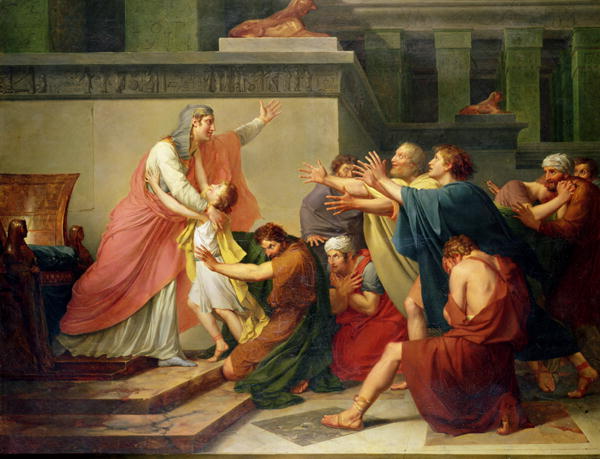
he looked down at his kneeling brothers
peeled off his robe of fine egyptian linen
to reveal his bloodsoaked coat and said
i am your brother Joseph
the one who has dreamed
who has waited so long for this moment
the one for whom you never had one kind word
the one whom you cast into an empty lifeless pit
the one whom you sold to traders like so much dead meat
the one who was taken down to egypt in chains
while you sang so sweetly to our father
your son was surely gutted by a wild beast oh
yes i am the one who slept for years
in that stinking dungeon floor with nothing
but these dreams of vengeance to keep me alive
and now you come to grovel here before me
pleading for my food for my pity my compassion
after joseph seized the child Benjamin and
had him impaled outside the city gates
his servants woke him and said if you please master
there are eleven israelites asking for you
and they claim to be your brothers.

(Genesis 45:4)