Ce Lo Reimagines “Imagine” (I Wonder If He Can?)

And now some thoughts on one of the most significant religion stories of 2012…

I’m talking, of course, about the upheaval caused when Ce Lo Green sang John Lennon’s “Imagine” in Times Square on New Year’s Eve and changed Lennon’s line “and no religion too” to “and all religions true.”

Wouldn’t you know it, outrage ensued. From the Twittersphere, predominantly:

“Cee-lo ruining John Lennon….not everything needs a remix. Although the message is relevant,” wrote a reader named D’Nai. Said @kevinkieninger: “Cee Lo. There’s some songs you just don’t cover. Like anything by the Beatles or John Lennon.”

“The whole point of that lyric is that religion causes harm. If “all [sic] religion’s true” it would be a pretty bleak place,” remarked @geekysteven, summing up Lennon’s anti-religion philosophy.

Ce Lo later tweeted a semi-apology for compromising Lennon’s universalistic ethic:

Yo I meant no disrespect by changing the lyric guys! I was trying to say a world were u could believe what u wanted that’s all.

My thoughts?  To be honest, my first reaction was to note that we’ve defintely gone down the rabbit hole when Ce Lo Green, the singer of a massive hit single called “F**k You”, is now somehow in the position of saving religion from John Lennon.

Personally speaking, I’ve always found that particular line less galling than the verse “Imagine no possessions/I wonder if you can” – especially when you consider that Lennon, the owner of a psychedelic Rolls Royce tricked out with a telephone, refrigerator, television and double bed, actually recorded this song from his 72 acre estate in Tittenhurst Park. (Interestingly enough, when Neil Young performed “Imagine” at a post 9/11 benefit concert, he actually changed that line to the more humble “Imagine no possessions/I wonder if I can.” From what I recall, no one seemed to mind it at the time.)

Hey, at the end of the day, it’s a mellow ditty that dreams a universal dream of a world that lives as one. Just settle down and stop bickering already…

Jacob’s Journey Complete

Auguste Rodin, photograph by Dornac

now israel’s eyes were dim with age he said
i can see the one in whose
steps my father walked even when they led straight
into the fire i see the one who answered
my mother but could not relieve her
pain i can see so plainly my own reflection masked
and unmasked deceiver and deceived ascending
descending wrestling embracing fleeing
returning yes i see quite clearly these scarred and
withered hands are the hands of jacob but the face is
the face of god when he was ready to stop
struggling jacob drew his feet into the bed
breathed his last breath
and finally returned
home

(Genesis 48:10, 49:33)

Honoring the Bridgers of Science and Religion

Among the plethora of “Top Ten of 2011” lists out there, one of the most interesting I’ve read was written by Paul Wallace for Religion Dispatches: “Top Ten Peacemakers in the Science-Religion Wars.” According to Wallace, 2011 may well have marked the beginning of the end of the conflict between science and religion – and to prove his point, he spotlights ten figures who, “in small ways and large, have helped to spread seeds of peace on (this) blasted-out battleground.”

His remarkably diverse and wide ranging list includes the likes of Republican presidential candidate Jon Hunstman (a devout Mormon who – gasp – openly supports the scientific findings on climate change), comedian Jon Stewart (who took on the political orthodoxies of American Atheists), film director Terence Malick (director of “The Tree of Life”) and Nidhal Guessoum (a prominent Muslim astrophysicist.)

Here’s Wallace’s take on Malick’s “Tree of Life” – a particularly lovely meditation on the often sublime intersection of religion and science:

It is indeed a strange and beautiful world. Malick, in his graceful and courageous film, reminds us that it is made stranger and more beautiful the more we open ourselves to it.

Both the closed-hearted scientism of atheist hardliners and the narrow creationism of religious fundamentalists kill our strange and beautiful world by flattening it beyond repair. They deny its depth and mystery. Malick, in joyous contrast, has shown us—through art and not through argument—just how wondrous and surprising it is to live life out here in the middle.

And for helpful insights on this important subject from a Jewish point of view, I commend to you this June 2011 post by Rabbi/blogger Geoffrey Mitelman:

Science is about creating hypotheses and testing data against these theories. Judaism is about how we act to improve this world, here and now. And these processes can easily go hand in hand.

So yes, if science and religion are seen to be competing sources of truth and authority, they will always be in conflict — especially if religion is “blind acceptance and complete certainty about silly, superstitious fantasies.” But if instead, religion is about helping people create a deeper sense of meaning and a stronger sense of their values, then I truly believe that science and religion can be brought together to improve ourselves, our society and our world.

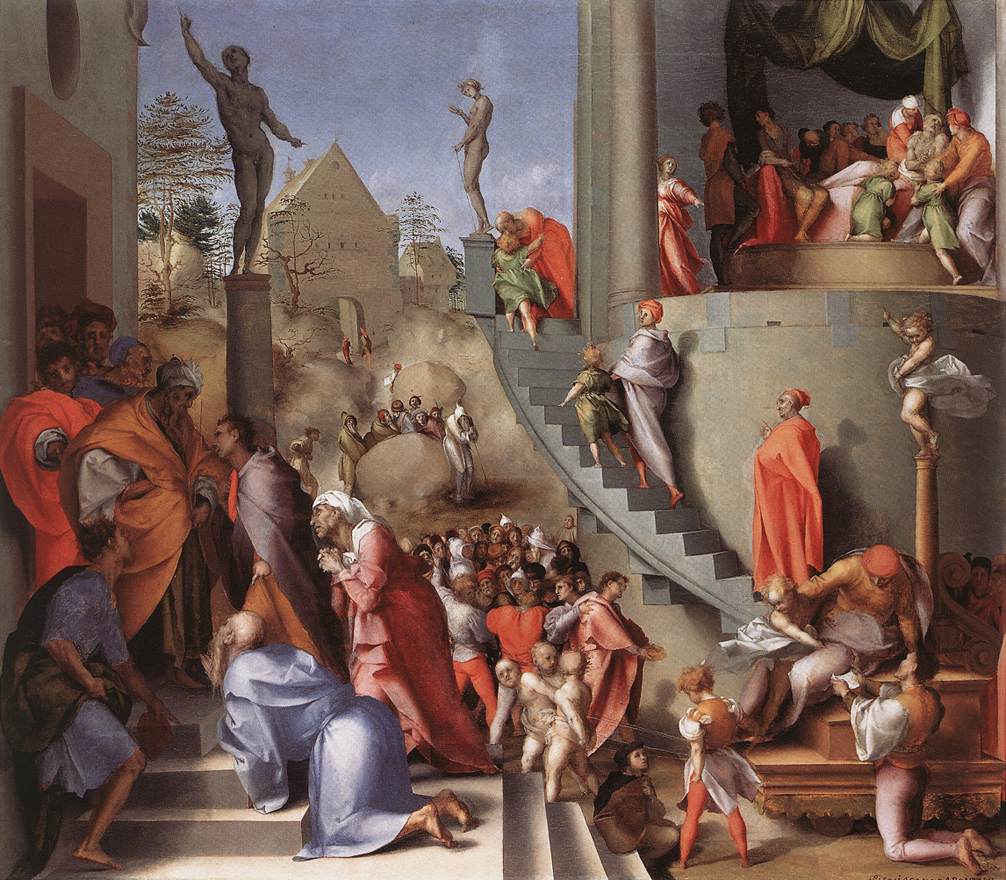
Joseph Remade


joseph was brought up from the
dungeon scrubbed clean his hair
shaved and stripped naked layer by painful
layer until he realized it’s not me it’s
never been me god has been dreaming
these dreams for us all along
then he was dressed in robes of the finest
linen a royal ring was slipped on his finger and
a gold chain was placed around his neck he was given
the name zaphenat-paneah but joseph secretly named himself
manasseh that means i don’t mind the pain any more and
ephraim that means come i am ready
to feed you

(Genesis 41:14,16,42,45,51,52)

New Musical Greetings for Hanukkah!

Happy first day of Hanukkah! If you’re looking for ways to light up this dark season, here are two gorgeous musical Hanukkah greetings courtesy of Pharoah’s Daughter. Check out these great versions of  Hanukkah classics “Maoz Tzur” (above) and “Al Hansim” (below). Both were filmed at the 2008 Rabbis for Human Rights – North America Conference in Washington DC.

(Anyone else growing weary of the utterly overused yet still somehow requisite German-folk setting we Ashkenazim use for Maoz Tzur? I’m going with this one when I light the candles tonight…)

Jacob Gets His Blessing

he tells him let me go the sun is rising but
jacob doesn’t hear all he hears is esau the elder esau the
stronger esau his father’s favorite who had eagerly
entered his father’s tent he’s hearing those awful
cries don’t you have a blessing left for me bless me
too father bless me too the words bursting out of
the tent please please bless me too
father over and over and over their bodies are writhing the
dark water splashing against the cold night air please bless
me too father bless me
he pins him against the slope of
the riverbank now jacob is screaming please bless me father he
shakes him like a limp rag doll sobbing i will not
let you go until you BLESS ME
the sun peeking over the jabbok jacob
looks down at his face and sees
his father beaming with love and pride at
long last his mother saying
it is safe to come home now my son his
brother saying seeing your face is like
seeing the face of god jacob blinks water
from his eyes the river is silent still mirror
clear he stands up sees the sun
and slowly limps his way across
the water

(Genesis 27:38, 32:25-27)

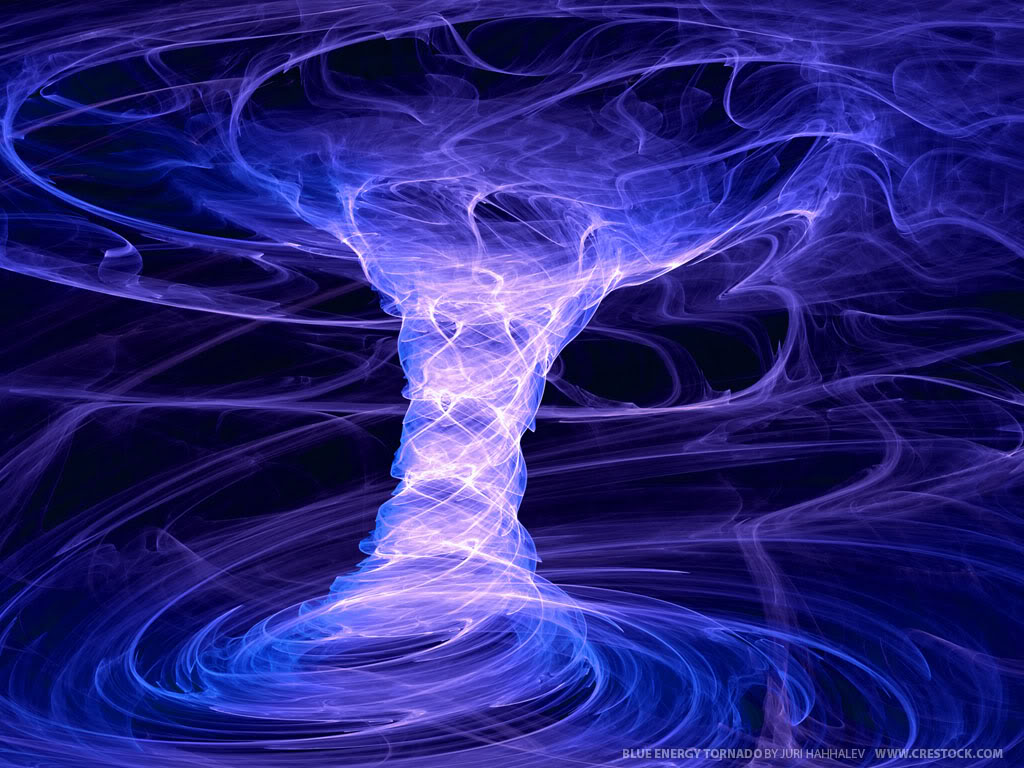
We Are Climbing Jacob’s Vortex

jacob came upon a certain place and
stopped there for the night for
the sun was setting he took a
stone placed it against
his head and lay down in
his dream he saw a ladder set
on the earth its top reached the heavens
angels going up and down according to
freud don’t call it jacob’s ladder he’d probably call
it jacobs phallus after all he’s reckoning with his childhood
passion to please his mother just look where
that got him and according to jung the
ladder is the axis of communication between jacob’s ego
and self in other words he’s building a stairway
from lower to higher realms of
consciousness the hindus might say
the stone on jacob’s head opened his anja
chakra did you know that spiritual
energy from external environments enter your
body through this gateway and did you also
know that this spot corresponds to
the pineal gland which descartes believed
was the seat of the soul and the
point of connection between body and
the intellect or maybe this certain place was a
vortex and when his head rested upon
it earth energy spiraled up whirling
toward the open heavens then came roaring
back down whispering i am
with you i will protect you wherever you
go i promise

(Genesis 28:11-15)

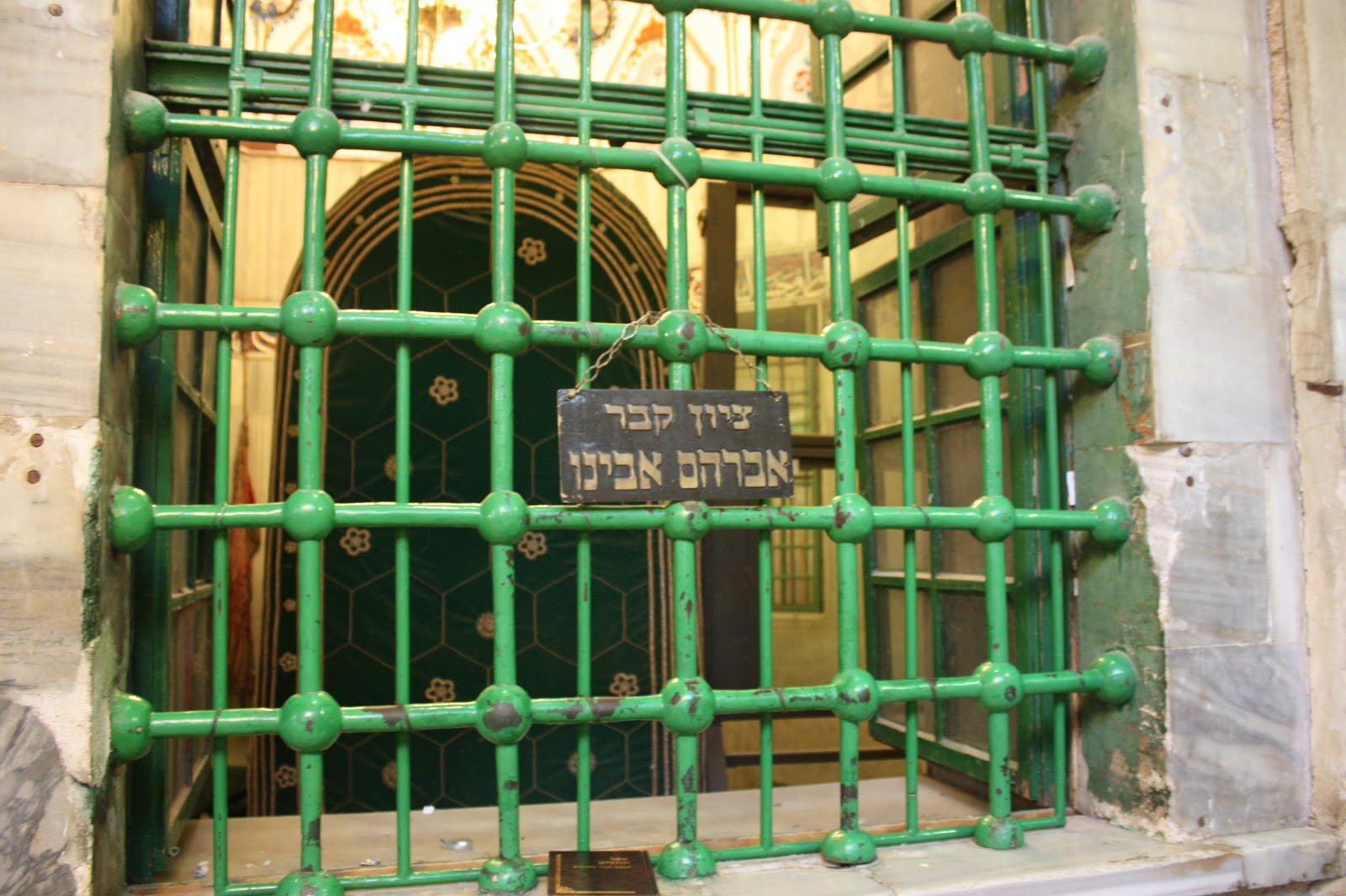
Ephron the Hittite Quotes a Price

abraham arose from beside his
dead and staggered into
the town square blinking
back his grief squinting into the white hot
noonday sun he said
i am but but a resident alien among you
sell me a burial site that i may remove
my dead for burial

ephron the hittite eyed the
frayed gash on abraham’s robe you
think four hundred shekels is
a bargain trust me my
friend you’ll never finish
paying for this
dirty stinking cave go
ahead and bury your dead

when abraham breathed his last his
his sons isaac and ishmael buried
him in the cave he had purchased then
god blessed his son isaac oh
believe me someday
this place is
going to cost us
all dearly

(Genesis 23:3-4, 14, 25:8-9)

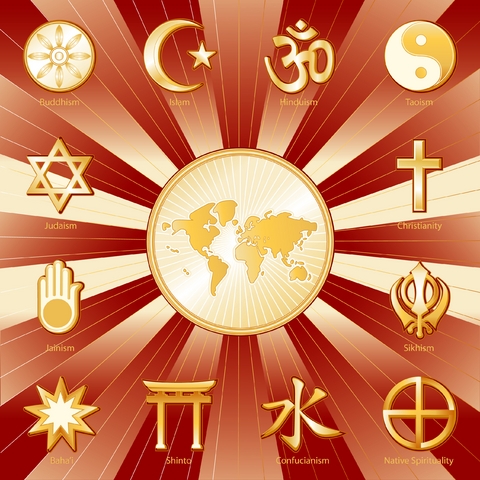
Are Religions Mixable?

According to a 2009 Pew study:

The religious beliefs and practices of Americans do not fit neatly into conventional categories. A new poll by the Pew Research Center’s Forum on Religion & Public Life finds that large numbers of Americans engage in multiple religious practices, mixing elements of diverse traditions. Many say they attend worship services of more than one faith or denomination — even when they are not traveling or going to special events like weddings and funerals… One-third of Americans (35%) say they regularly (9%) or occasionally (26%) attend religious services at more than one place, and most of these (24% of the public overall) indicate that they sometimes attend religious services of a faith different from their own.

A welcome phenomenon? U. of Miami religious studies professor (and Christian liberation theologian) Ivan Petrella says yes:

We’re a nation moving beyond religious pluralism. A religiously plural nation is a multi-religious nation, one where religions peacefully coexist. But within pluralism, religions are still watertight compartments. People aren’t allowed to belong to more than one or to borrow the ideas and practices of another, without feeling like they’re traitors to their faith. That’s changed. In our emerging religious reality people are shattering the compartments and becoming multi-religious. We’re no longer just a multi-religious nation. We’re a nation of multi-religious people…

The United States has always thought of itself as a great experiment. Let’s not be shy about experimenting with multiple faiths as well.

Another well-known professor of religion, Steven Prothero, begs to differ, saying there are just too many important differences between religions – and our tendency to sample a bit of each smacks uncomfortably of American consumerism:

At their best, Judaism and Christianity and Hinduism and Buddhism call us to rethink the world and then challenge us to remake it—and to remake ourselves. But the truths of one religion often clash with those of others, or contradict each other outright. Even Protestantism has carried inside its various denominations strikingly different visions of the good life, both here and in the hereafter. Absent a chain of memory that ties us to these religions’ ancient truths, these visions are lost, and we are left to our own devices, searching for God with as much confusion as we search, in love, for the next new thing.

Theological student Yaira Robinson concurs, using the metaphor of language to understand the importance of exclusive religious affiliation:

In order to communicate effectively, though, you can only speak only one language at a time. When you mix and match language systems—throwing in vocabulary from other languages, re-arranging the grammar, tossing in foreign idioms—then communication becomes difficult. Likewise, each religious system is a coherent whole, with all its parts—stories, history, prophets, teachings, and practices—working together to facilitate communication. This is the beauty of speaking one religious language, of walking one religious path—doing so can bring our lives into a clearer relationship with God.

What say you? I’m curious to hear your thoughts!